

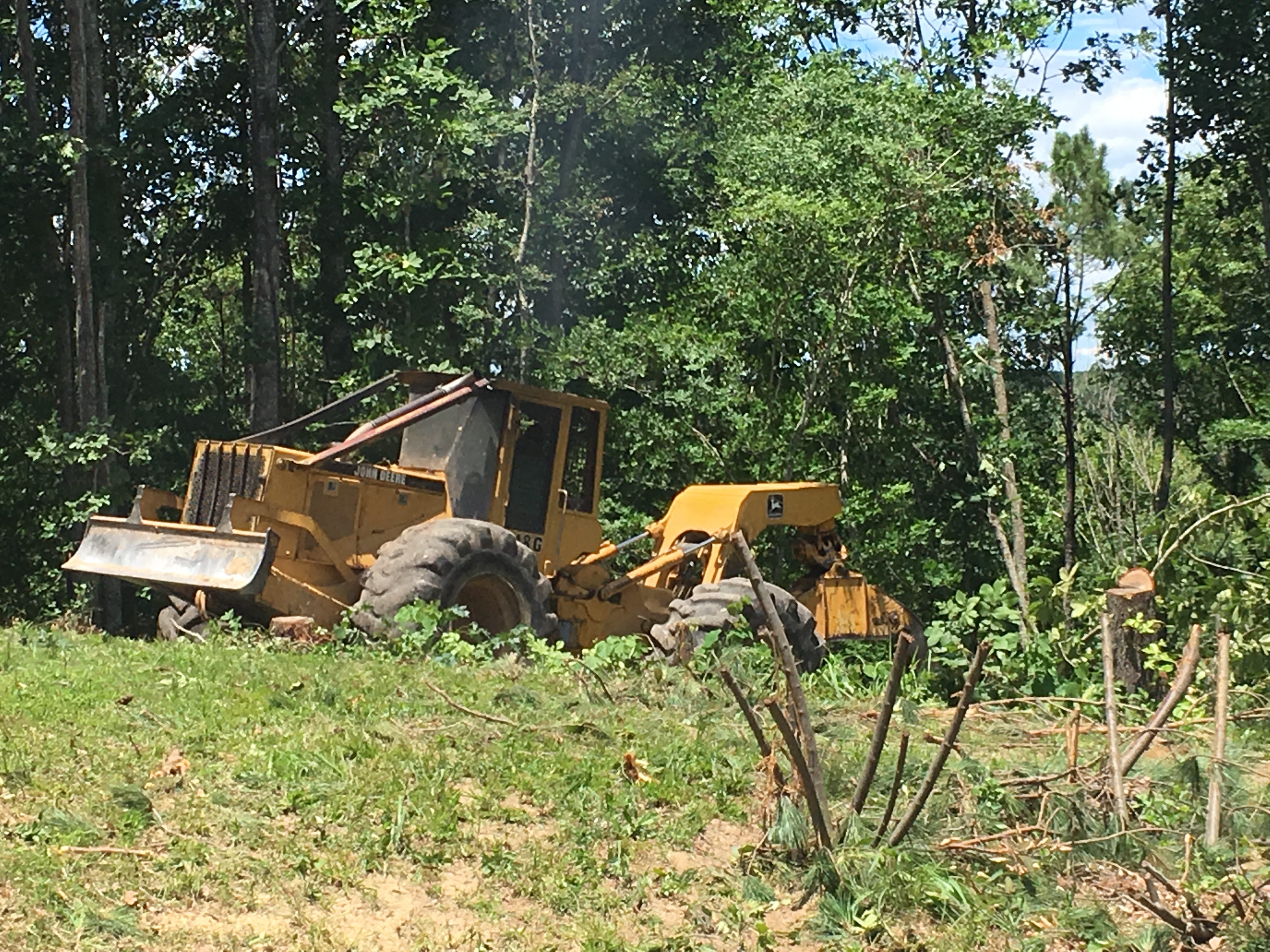
“You can’t stand there!” The logging crew chief yelled at me over the roar of the grapple skidder carrying a half dozen mature pine trees in its mouth.
I refused to move. My body shielding a young dogwood. My friend Mary, in the same position around a neighboring dogwood, was equally defiant. The roar of the machine was shaking the ground.
When we refused to move, the logging truck came roaring between us as we ducked our heads, and held our breath and closed our eyes, bracing for impact.
The next day, I gained the courage to admit that I had made a terrible mistake.
When I told the crew chief that I no longer wanted him to cut the rest of the pine forest, I expected him to be angry but instead, I saw a sigh of relief.
These past few days had been as stressful for him as they had been for me.
As they loaded the final cut pines high on the logging trucks and pulled away, I breathed a sigh of relief along with the rest of the forest inhabitants.
But what had led me to stand in front of a logging machine in the first place?
My Path into Relationship with a Forest
Shortly after meeting Stephanie and beginning my journey as a community cultivator (see Chapter 1 of this series), I took a class in Celtic Spirituality as part of my Master of Divinity program led by Dr. Stephan Brachlow, Professor of Spirituality at Baptist Theological Seminary at Richmond.
Week after week, we started in a circle in the retreat center with a candle lit in the center, welcoming the spirit into our midst. We then dispersed across the wilderness trails for an hour with nothing but a paper and pen and no instruction other than to listen to the more-than-human world.
Our assignment each week was to write a short essay about what we learned from these elders and more-than-human kin.
As a second-career student transitioning out of a career as a CPA, this course stretched me and shaped me more than any single experience I have ever had.
Dr. Brachlow did not “teach us” about the Holy Mystery, he invited us to experience it the way our Celtic ancestors did – through relationship with the more-than-human world.
He invited us to dwell with the mystery instead of studying it.
These encounters and Dr. Brachlow’s guidance into the contemplative stream of Christianity permanently shaped my spiritual path.
A path that led me into a relationship with an entirely new type of community – one consisting of trees, birds, streams, and butterflies.
At the conclusion of the course, I wanted more.
I approached my husband about purchasing land. He loved the idea.
For months, he traveled in a 90-minute circle around the rural areas surrounding our suburban community.
One Sunday afternoon, I got a call.
“I found it!”
“Are you sure?” I asked him.
“Yes. This is everything we have been looking for. There is a steep ridge overlooking a beautiful creek and a green pasture. The ridgeline is covered with hardwood trees, and there is a dirt road that will allow us to enter from the top of the ridge with a mature pine stand.”
The next weekend, the kids and I drove out and confirmed his assessment.
Weeks later in the summer of 2005 just months after incorporating Embrace as a non-profit, we were the proud owners of a 23-acre ridge that the locals deemed “unusable” because of the rugged incline.
For the next fifteen years, this forest became my greatest teacher, shaping me both as a pastoral leader and a community cultivator. Then, in 2020, this place became my forever home.
My understanding of this forest community has grown much the way my understanding of human communities has grown, slowly over time with lots of failed experiments along the way and many wise guides to help me rediscover the paths forward.
The more time I spend in both exclusively human and exclusively more-than-human communities, the more I see how crucial it is to the well-being of both that we reconnect these pieces of the ecosystem.
Seeing the Forest as Community
We live at a time when a new view of reality is emerging, where spiritual insight and scientific discovery both contribute to our understanding of ourselves as intimately interwoven with our world. —Joanna Macy
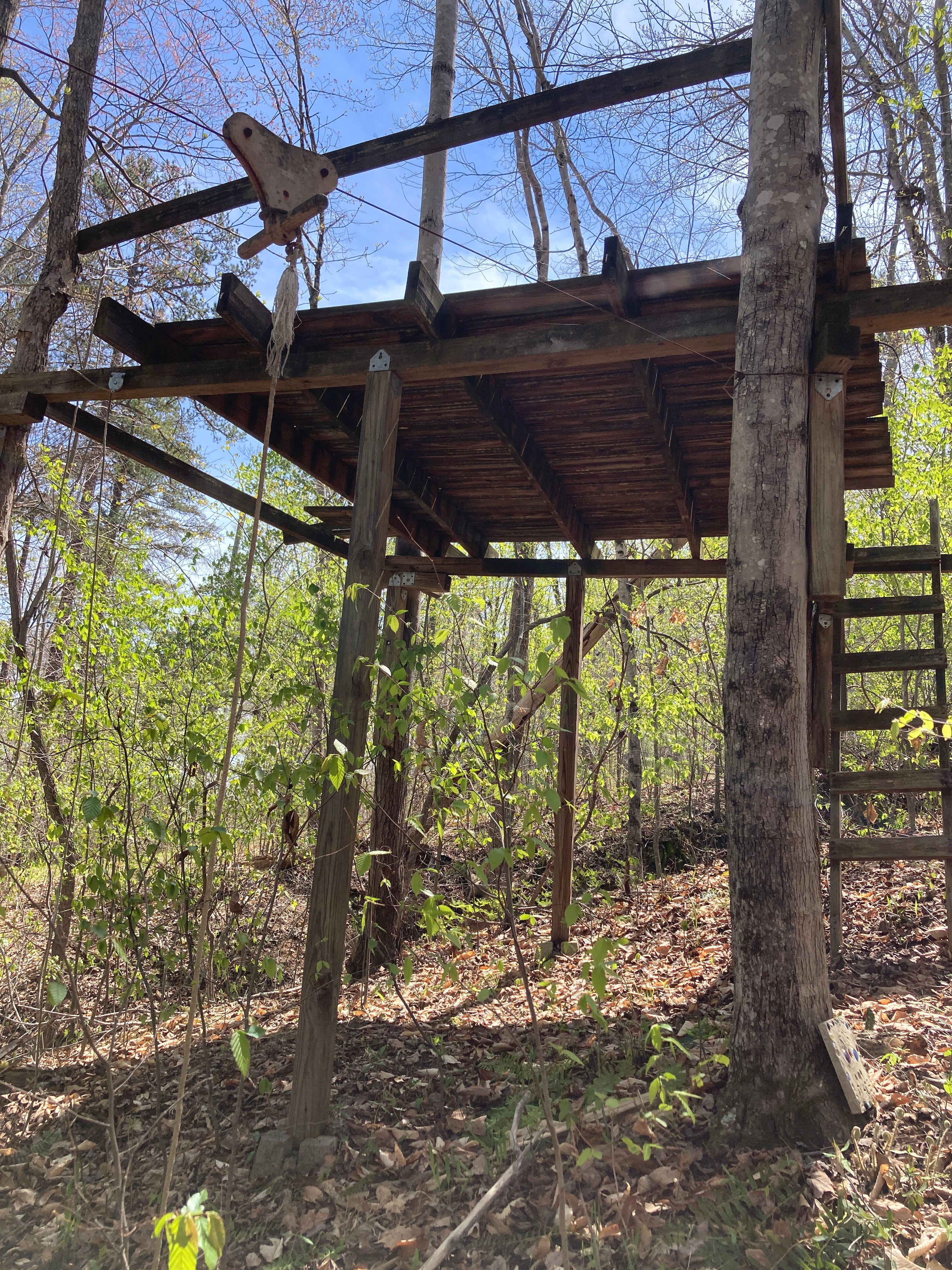
Not long after purchasing our property, we placed a small structure, which we call a cabin, deep in the woods. My husband and I then built a treehouse for our children, who at the time were five, eight, and eleven.
Over the years, I have found myself in that same treehouse. I call this treehouse The Eagle’s Nest. It is the place I go, literally or metaphorically, when I need a higher view, a fresh perspective, or when I know I need to make a change—to evolve.
What I love about this higher vantage point is the ability to see the forest community at work.
I watch as squirrels collect acorns, walnuts, and hickory nuts. The trees offer these gifts freely, and in return, the squirrels eat some and plant others, thus perpetuating the forest in an act of reciprocity.
The trees are incredibly wise hosts. They provide homes not only for the squirrels and birds, but they also act as nurseries for caterpillars who will grow into butterflies and pollinate the tree blossoms, thus ensuring more food for the squirrels.
These same caterpillars are the preferred food for baby birds. As adults, these birds consume the seeds of native plants and spread them across the forest.
There is a deep connection between different species.
Many caterpillars can only eat the leaves of particular plant species, those they have evolved with.
The relationship between the canopy trees, the understory trees, the herbaceous layer of plants, and shrubs is equally interdependent. Many species are only able to grow in a closed canopy area, while others choose the sunlit edge spaces.
Beech trees prefer the north-facing ridges while the Chestnut Oak thrives on our rocky west ridge.
The Red Oak sprouts up in poor soils, whereas its cousin, the White Oak, needs a much richer soil. The birds, wildflowers, animals, and fungi are equally as diverse in their preferences and relationships.
The diversity of species and their relationships to one another and their habitat is fascinating and complex.
It took me years to understand that this complex web of interdependent relationships was the very thing that made the forest flourish.
Consulting the “Experts”
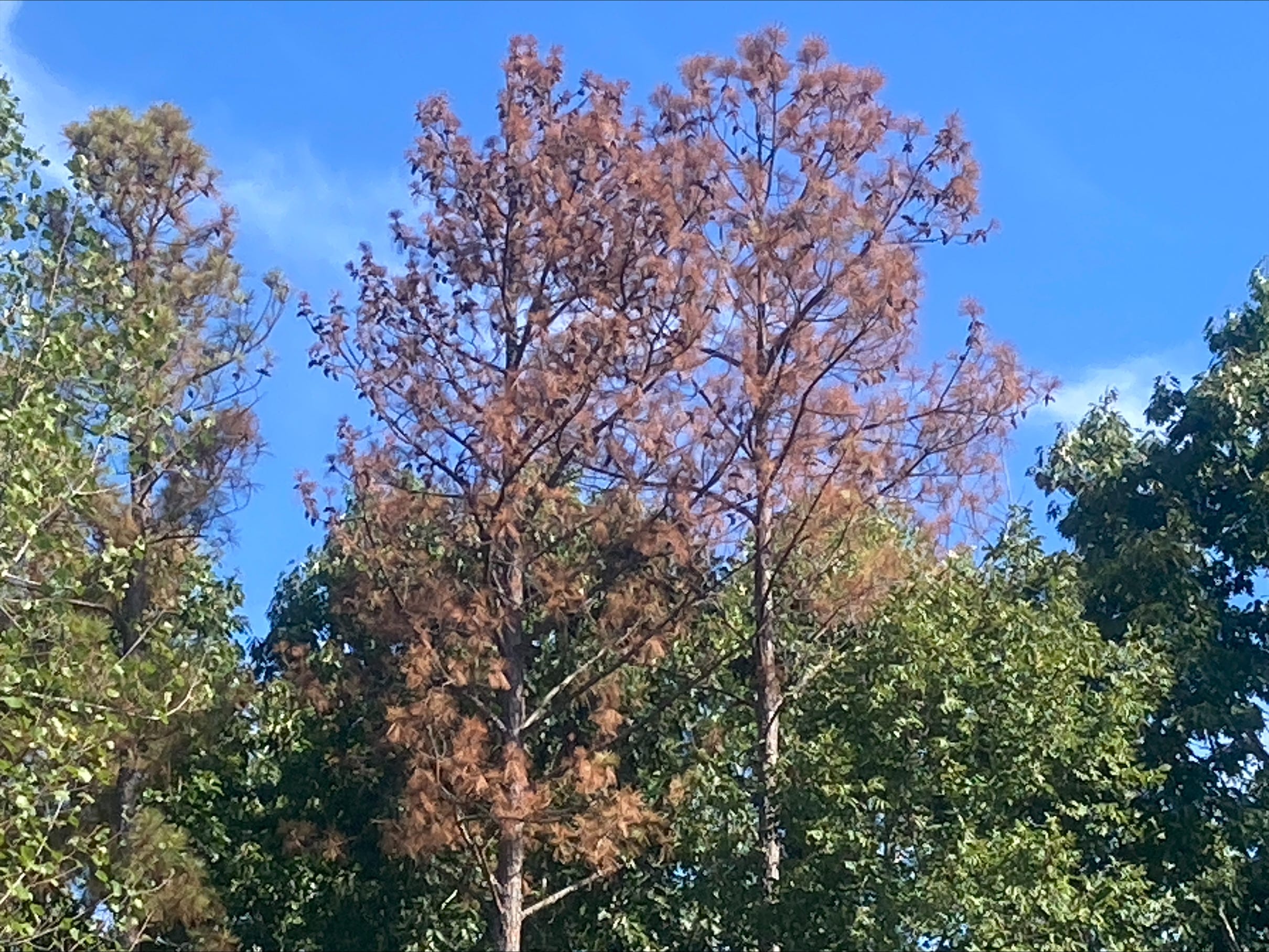
A decade after acquiring our land, we noticed that several pine trees were dying.
I recall standing in front of those dying pines with the local forester from the Virginia Department of Forestry.
“You have black walnuts growing up in the tree stand. It releases a substance called juglone, which can weaken some other trees, including pines,” he said.
Soon after, we started seeing sawdust at the base of some of the dying pines. We called in another expert.
“You have pine bark beetles. They are finishing off those trees the walnuts have weakened. You should cut this stand and replant,” he said.
I had seen the devastation of a clear-cut forest across the road and naively thought a “select cutting” of the mature pines would save the emerging hardwoods which were native and tolerant of the juglone.
I meticulously marked all the trees I wanted to save with pink ribbons, paying special attention to the dogwood trees.
The crew chief of the logging company just shook his head when he looked out at all the pink ribbons.
“I’ll do my best,” he said.
His crew then went to work hand-cutting all the pines. What I did not calculate is just how much devastation 100-foot trees make when they fall in the forest. Those falling trees paid no attention to my pink ribbons, flattening everything in their path and injuring all those around them.
While this was heart-wrenching to watch, it got worse when their giant machinery rolled around, pulling the giant carcasses to the road, ripping into the soil and destroying everything in its path.
The day after I used my body as a shield for a young dogwood tree, I pulled the plug on the whole operation. Though the job was only half complete, I simply could not allow the devastation to continue.
I listened to the outside “experts” who told me my only option was to harvest the pines or risk losing the whole stand.
I never stopped to consider how allowing the land to regenerate naturally might actually be healthier for the whole forest community in the long run.
At the time, I simply saw a problem – dead pines.
I trusted the experts.
I never considered asking the forest community what they would prefer I do.
What I did not see was the role these mature trees were playing in the ecosystem and how their removal would impact the whole.
It did not take long to recognize I had made a tragic mistake.
Disturbing the soil allowed invasive plants like Japanese Honeysuckle, Japanese Stilt grass, and Autumn Olive to gain a foothold.
While we tried to leave the native hickories, dogwoods and oaks, those that were not crushed or damaged by the loggers snapped when they had to stand alone in violent wind storms.
In the half of the pine stand that we chose not to cut, the pines are still dying, but they die from the top down, snapping off in small pieces, doing minimal damage to the trees below and leaving the soil undisturbed.
This slow shedding allows small amounts of light in over time, encouraging the growth of the native trees that have been waiting decades for their turn to race to the canopy.
Little by little, the hickory, oak, maple and dogwoods are reclaiming the forest and contributing to the ecosystem.
Meanwhile, the invasives in the disturbed sections, despite my best efforts to control them, continue to smother the native trees with vines and crowd out the native plants.
At first, it was tempting to see the Black Walnut as the villain in this story. But the more I watched, the more I understood that the real problem was not the walnut. It was my assumption that this land was supposed to remain a Loblolly Pine monoculture in the first place.
As the forest moves from a monoculture toward a more diverse ecosystem, I have seen far more birds, insects, and animals take up residence here. The forest is becoming more alive as she becomes more diverse.
Like human communities, there is something genuine that is continually seeking to emerge. Every ecosystem, just like every tree, seems to have its own “original instructions”—what Robin Wall Kimmerer describes as the unique gifts and responsibilities each being carries within the greater whole.
No matter how hard we try to impose a different design, like planting a monoculture where a diverse hardwood forest might otherwise emerge, the original character of the ecosystem keeps pressing toward expression.
In other words, perhaps even the trees have a kind of dream for their community, and when they are allowed to offer their gifts, they help bring that dream to life.
There was an intelligence at work that I could not understand.
It is an intelligence that the current industrialized worldview is blind to. The individual trees and their value in human terms were the focus of the foresters and loggers.
Yet, this ability to see the complex web of interconnectivity was once the governing worldview.
Indigenous peoples have stewarded these forests for thousands of years, developing sophisticated forms of traditional ecological knowledge (TEK) that have been disrupted, suppressed, or lost through colonization.
However, the trees, birds, and streams remain our living teachers if we would only stop and listen to their wisdom.
This was what my course in Celtic Christianity invited me to learn how to do.
The forest was healing herself and where she was left to her own devices, she continues to restore the native ecosystem, mindful of all the layers of connectivity that exist in this living system.
Those dead pines have become homes to woodpeckers and owls. The insects that are consuming the dead wood feed the birds.
The birds help spread the seeds of early succession plants like the blackberries that feed not only the birds but the bear, raccoon, fox, and even me.
The squirrels gather the nuts from the mature native tree stand and plant them in the transitioning pine forest, ensuring the next generation of trees will be native to this land.
What I had once called decline I now see as transition.
What I had called waste was becoming habitat.
What I had called a dying forest was becoming a living community again.
Seeing the Community as a Forest
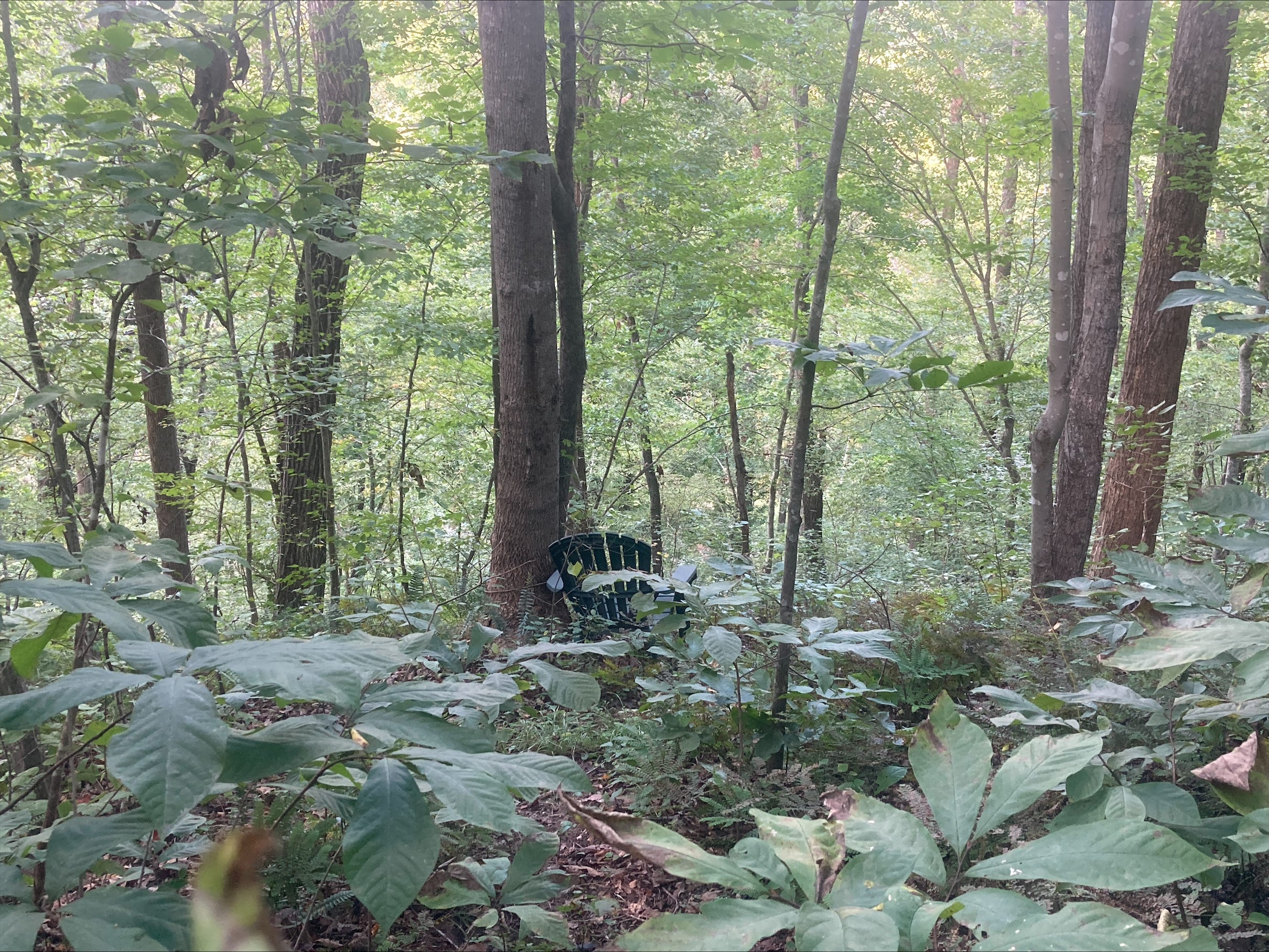
Reflecting on my attempts to manage the forest, I realize I had made the same mistake twice.
I consulted outside experts who looked at a forest and saw timber.
In my community work, I consulted outside experts who looked at the community we had formed and only saw the furniture.
In both cases, the experts focused on the thing they assumed I was trying to produce instead of the relationships that made the whole system alive.
What if instead of outsiders, I had listened to the forest community?
What if I had centered the voices of the birds, shrubs, and dying pine?
Would these terminally ill patients have preferred to die a natural death, allowing their bodies to feed and house the forest creatures they were in relationship with?
Or would they have chosen to cut their lives short so they could be processed and made into toilet paper?
Seeing the Gift Economy
In the early days of my community cultivation efforts, I allowed the community to emerge organically. Stephanie, Rosalind, Georgiana, and Brickhouse, along with my suburban neighbors, all volunteered to give their gifts to the community. Much like the squirrels, birds, and trees, we were governed by the gift economy.
We did what we could with what we had, and we always seemed to have exactly what we needed.
There was a spirit of generosity, abundance, and reciprocity.
When I listened to the experts, I was told to specialize, scale, and grow the furniture bank.
The “experts” thought the furniture was the most important “product.”
Much the way the forester thought the timber was the “product” of my forest.
This consumer or industrial mindset is rampant in the helping sector of non-profits, governmental agencies, healthcare, and faith communities.
These systems are so focused on service delivery that they fail to see the community and the value of interdependent relationships that make a community resilient and sustainable.
In both scenarios, it was a failure to see the whole complex system of interdependence that led to the unintended consequences.
Thankfully, in both cases, I felt the loss and was able to shift my approach by listening deeply to those most impacted, those who call these communities home.
Treehouse Invitation
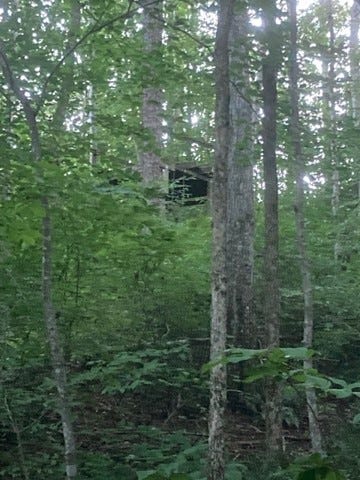
Sitting in that treehouse, high up on the forest-covered ridge nearly two decades after we constructed it, I not only see the forest from a new vantage point, I also catch glimpses of the past: a long-abandoned tire swing, a rusty zip line, and parts of my daughter’s secret hideout.
The children are all grown now, and this treehouse gives me the pleasure of being suspended in the air and the thrill of being able to see so many things all at the same time.
From my perch, I always feel a bit sad seeing the fallen trees. Some die as a result of disease or old age, but in recent years it is violent winds that topple many otherwise healthy trees.
I hate seeing things go to waste, so I ponder salvaging the lumber and using it for some future good. At one point, I even considered turning the bottom part of the treehouse into a woodshed.
When we built that treehouse, I never imagined it having a purpose other than the one for which we built it. But the forest keeps reminding me that nothing stays the same.
Everything evolves.
My forest has taught me a lot about life, death, and transition from one to the other and back again.
Perhaps that is what I am inviting you to do throughout this series: climb into the treehouse.
Not to escape the community below, but to see it differently.
To notice the relationships you could not see from the ground.
To ask what is emerging, what is dying, what is being crowded out, and what gifts are waiting for room to grow.
Evolving is hard. It is often painstakingly slow.
We will make mistakes along the way.
We must tend to our own hearts if we want to endure.
That is the gift the forest has given me.
She has helped me see my mistakes and find more life-giving paths forward.
There is an intelligence in her design that is a mystery to me, but when I listen for that sound of the genuine, I always find my way back.
This is the second post in my Fall Power Shift Revisited series.
Previous posts in this series include, A Fresh Perspective and Embrace the Community.
If you enjoyed this post, I hope you will consider subscribing, adding your thoughts in the comment section, and sharing this post with others.
All materials on my site are free, and 100% of any paid subscriptions are donated directly to Embrace Communities, a public charity.
Meeting true experts…
life, death, life (r)evolution.
Mutual embrace.
Glad you're in your woods❤️