

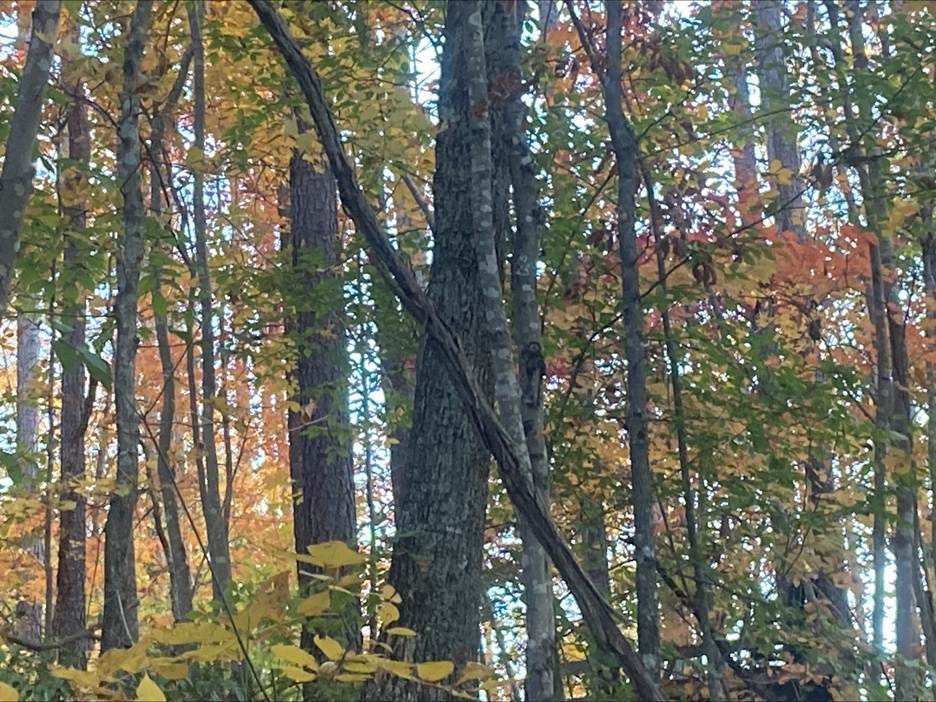
I have spent much of my life sensing that the world we were handed was not the only possible world.
Now I am finding other people who sense the same thing—and together we are beginning to experience another way of being.
A few weeks ago, I hosted a half-day eco-spiritual retreat here at my home in rural Virginia.
The fall colors were at their peak, with temperatures in the low 70s and sunny skies.
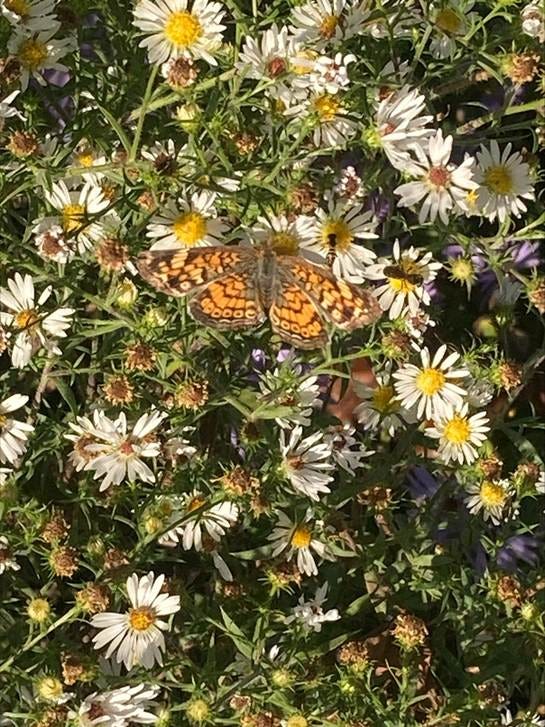
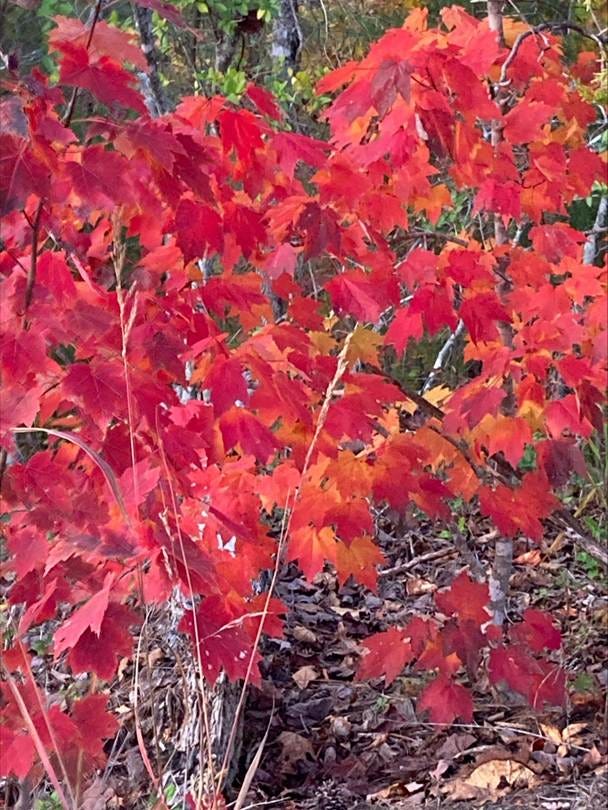
It was a wonderful day of basking in beauty—the spectacularly adorned maples, the buzz of pollinators on the asters, as well as the smiles, laughter, and thoughtful reflections of my human companions.
We began in a circle around our fire pit reading an abridged version of Charles Eisenstein’s A More Beautiful World. As our own chorus of voices read the words below one by one into the circle, I felt like the trees, wind, sky, butterflies, and falling leaves all joined in.
Sometimes I feel nostalgic for the cultural mythology of my youth.
Life made sense. If you worked hard, you could get good grades, go to a good college, go to grad school, follow some other professional path, and you would be happy.
My childhood perceptions were part of a story in which humanity was destined to create a perfect world through science, reason, and technology—to conquer nature, transcend our animal origins, and engineer a rational society.
My education, the media, and most of all the normality of the routines around me conspired to say everything is fine.
But something in me never fully accepted what I had been offered as normal.
Life was supposed to be more joyful than this, more real, more meaningful.
And the world was supposed to be more beautiful.
We were not supposed to hate Mondays and live for the weekends and holidays.
We were not supposed to have to raise our hands to be allowed to pee.
We were not supposed to be kept indoors on a beautiful day, day after day.
And as my horizons broadened, I knew that millions were not supposed to be starving. That the rainforests were not supposed to be shrinking or the fish dying or the condors and eagles disappearing.
More and more of us cannot bear to stay in the old normal any longer.
We live today at a moment of transition between worlds.
At the bottom of our civilization lies a story—a mythology, a set of narratives, agreements, and symbolic systems that comprise the answers our culture offers to life’s most basic questions.
Who am I?
What is the purpose of life?
Eisenstein calls this the old story—and then invites us to imagine the story that might emerge in its place.
With those two narratives in mind, we hiked to a circle of cushions deep in the forest.
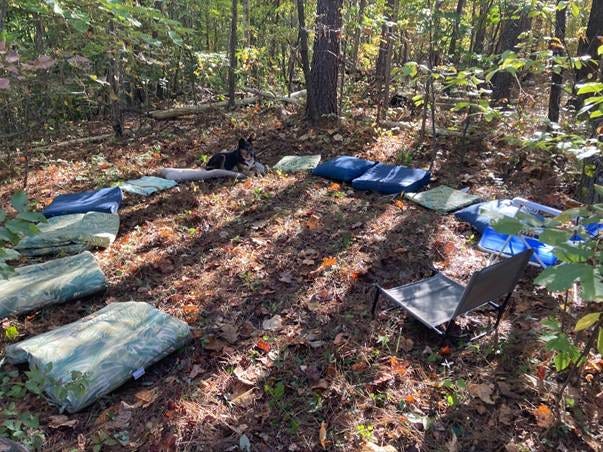
This circle is in the heart of a stand of pine trees that are dying. This monoculture pine stand was planted for wood production and was harvested repeatedly over the past century.
The forest itself seemed to be telling the story Eisenstein had just described. We were standing in the space between what had been and what was becoming.
Eisenstein defines the old story this way:
Who are you?
You are a separate individual among other separate individuals in a universe that is separate from you as well.
You’re a bubble of psychology, a mind separate from other minds and separate from matter.
What is the purpose of life?
There is no purpose, only cause.
The universe is blind and dead. Thought is but an electrochemical impulse. Love but a hormonal cascade that rewires our brains.
The only purpose of life other than what we manufacture ourselves is simply to live, to survive, and reproduce to maximize rational self-interest.
This is the story of separation.
The old story.
These answers are changing today along with everything built atop them—which means our entire civilization.
That is why we sometimes get the fretful feeling that the whole world is falling apart.
The story of separation crumbles around us.
And as it does, another story is beginning to emerge.
I invited our group to lie back on the cushions and to share what they saw.
What was fascinating was that everyone focused on the new growth—the brilliantly colored maples, hickories, and dogwoods—even though fallen pines surrounded us and dead ones towered overhead, waiting to crash to the ground.
This portion of our land is in the gap between the old story and a new story.
Old Story: This forest is designed by humans to efficiently serve humans through its conformity.
New Story: This forest is a complex web of interdependent relationships designed to support a variety of beings through its ever-increasing diversity.
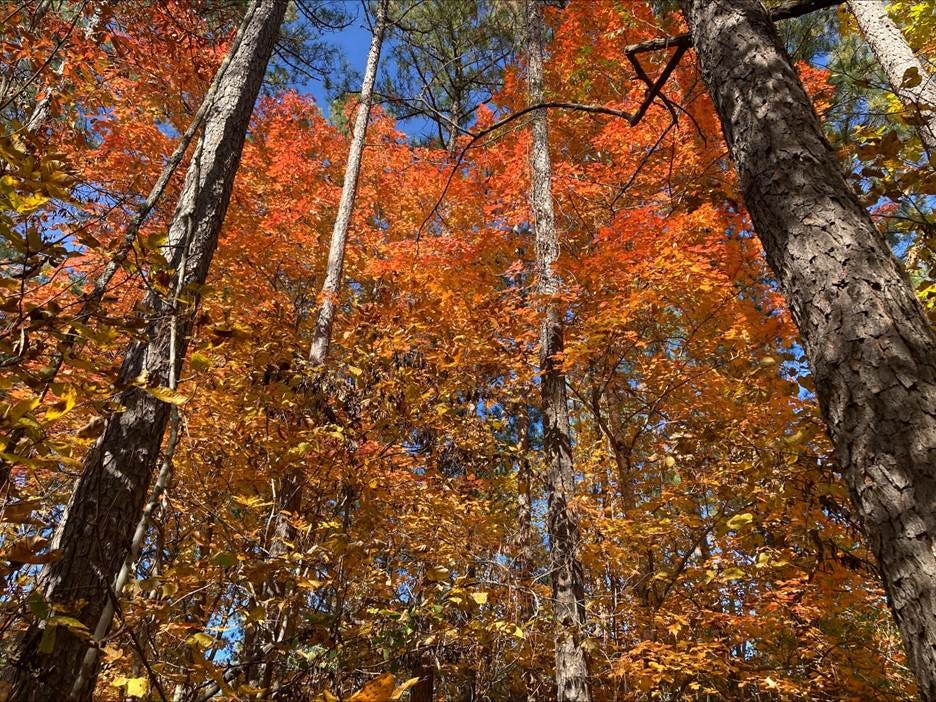
There in the understory, we marveled at the beauty of what was emerging as one story collapsed and a new one declared its arrival.
Then I invited everyone to spend an hour following the wild spirit wherever it led them—to lean into the emerging story.
Eisenstein describes that emerging story this way:
Old story: I exist independently.
New story: I exist relationally.Old story: The driving force of human behavior, especially economic behavior, is to maximize rational self-interest.
New story: Human beings yearn to express their gifts toward something meaningful. We each have a unique and necessary gift for the world.Old story: The other beings of nature are indifferent or hostile to human well-being. Progress therefore comes through domination of nature.
New story: The universe is generous. We can thrive by cooperating with the forces of nature and the rest of life.Old story: The events and people we encounter in life are basically random.
New story: Every person we encounter and everything we experience reveals an implicit order to the world.Old story: Humans are separate from nature.
New story: Nature is part of us and we are part of nature.Old story: The great purpose and destiny of humanity is to bring order and intelligence to a world that has none of its own.
New story: The purpose of humanity is to participate in the unfolding of life and beauty in the cosmos.The destiny of humanity is to bring all our gifts and powers into the service of life—to create beauty and wonders and to witness what life creates through us and around us.
Each of our wanderers headed off in different directions.
As I walked in silence along the trail, I was reminded of my journey to this moment. A journey that began when I first read Joanna Macy’s book Active Hope and knew I was called to what she terms The Work that Reconnects.
Eisenstein’s old story and new story reminded me of Macy’s three stories of our time: Business as Usual (the old story), The Great Unraveling (the current story of collapse), and The Great Turning (the new emerging story).
It is the story of a more beautiful world made possible by ordinary people who choose reconnection over separation.
It is a story I was now living.
An hour later, we all returned to the fire circle with our own stories to share.
Jess and Abi chose the more difficult trail down to the creek.
Jess returned to the circle with Shrimp of the Woods mushrooms gently cradled in her sweatshirt. As she unpacked them, she explained how to identify and cook them.
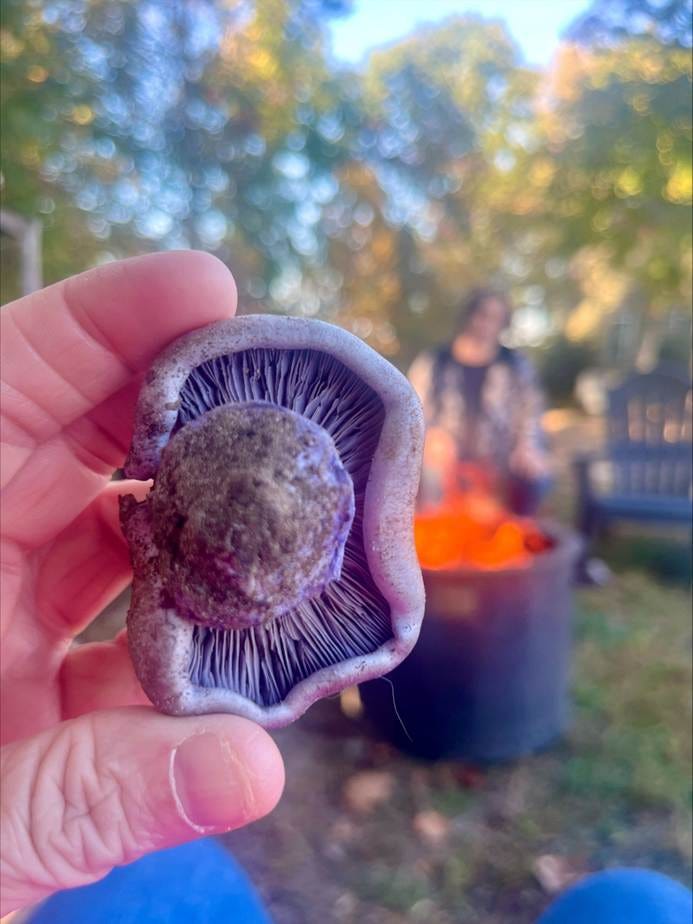
Arriving back to the circle late and with disheveled hair, Abi excitedly explained how she had traveled the entire forest to the creek trail, relying on her memory and past adventures in this forest.
Ruth and Jack followed the road back to the house and the pollinator gardens.
Ruth had collected beautifully colored leaves that she shared around the circle. Jack explained that he spends very little time in nature and was thankful for the experience.
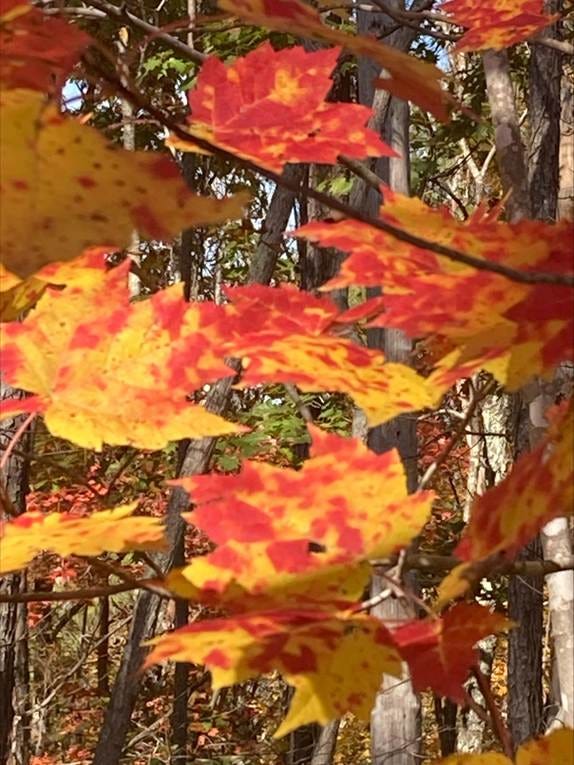
Mary and Callie chose paths that took them through the forest.
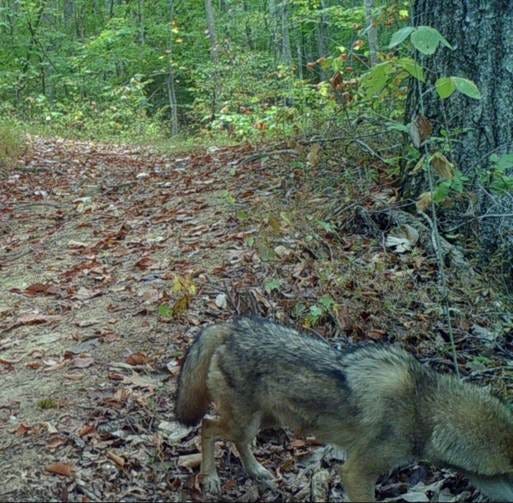
Mary encountered a coyote as it darted across her path.
As she reflected on the encounter, she did a quick search to see what a daytime sighting of a coyote on a full moon might signify. “A trickster, adaptability, and the illumination of hidden truths,” she shared.
I could see her pondering the significance of this encounter for her personally.
Then Callie added that simply sharing her encounter with our circle made it a shared experience for all of us and invited us all to reflect on how this little trickster might be inviting us to adapt or see hidden truths.
It was the most unexpected moment in our time together and something none of us will soon forget.
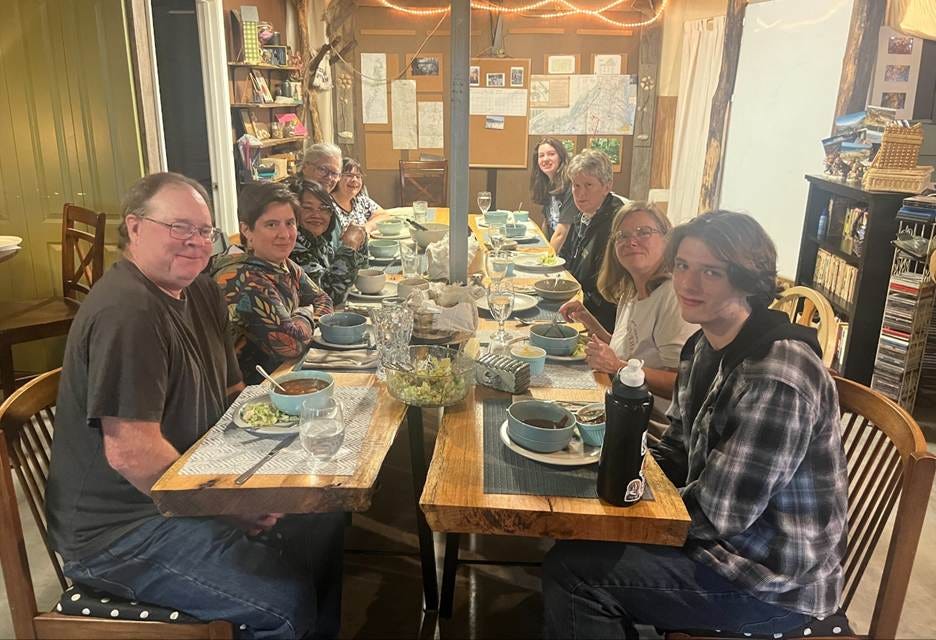
We then gathered around the community table in my basement and enjoyed a wonderful meal with many textures, colors, tastes, and contributions.
We had arrived to that opening circle as a dozen strangers but dined together as fellow pilgrims on a journey from the old story to the new one.
The room was filled with laughter, joy and stories we will all cherish for a lifetime.
After dinner, we took a sunset stroll to my neighbor’s outdoor Chapel to give thanks for the day as our time together drew to a close.
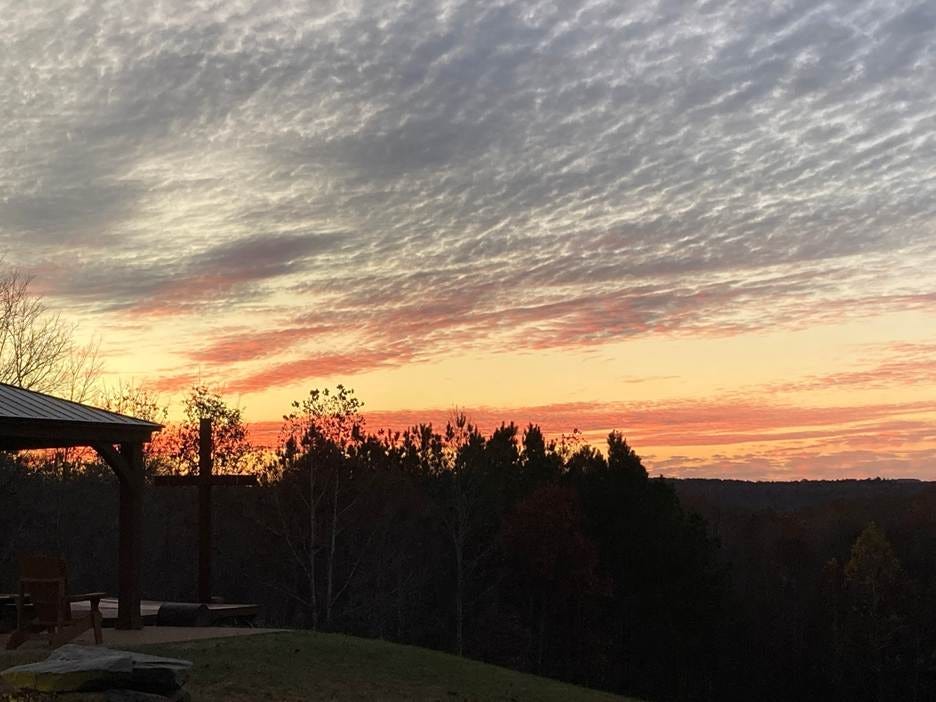
As we sat in silence watching the sun set behind a large wooden cross, I reflected on how my fellow travelers found their way into this circle.
Jill and Mary are fellow Master Naturalists. Callie came through her commitment to traditional ecological wisdom; Abi and Jack through their desire to care for the earth; Jess through her lifelong journey with the wild spirit within; Chris and Kristen through living close to the land; Ruth through her Christian faith. My own path was illuminated by my study of Celtic Christianity in seminary.
Our paths are different, but none of them are new or unique. They are all invitations to reclaim the connection we have lost.
A magnificent full moon lit our path back home as we walked in reverent silence back to the circle where we had started our journey.
Eisenstein’s final words echoed in my mind as our time together drew to a close:
How beautiful can life be?
We hardly dare imagine it.
Of all the things that human beings make and do for each other, it is the unquantifiable things that contribute most.
The only thing we take away with us is what we give away.
How beautiful can life be?
We hardly dare imagine it.
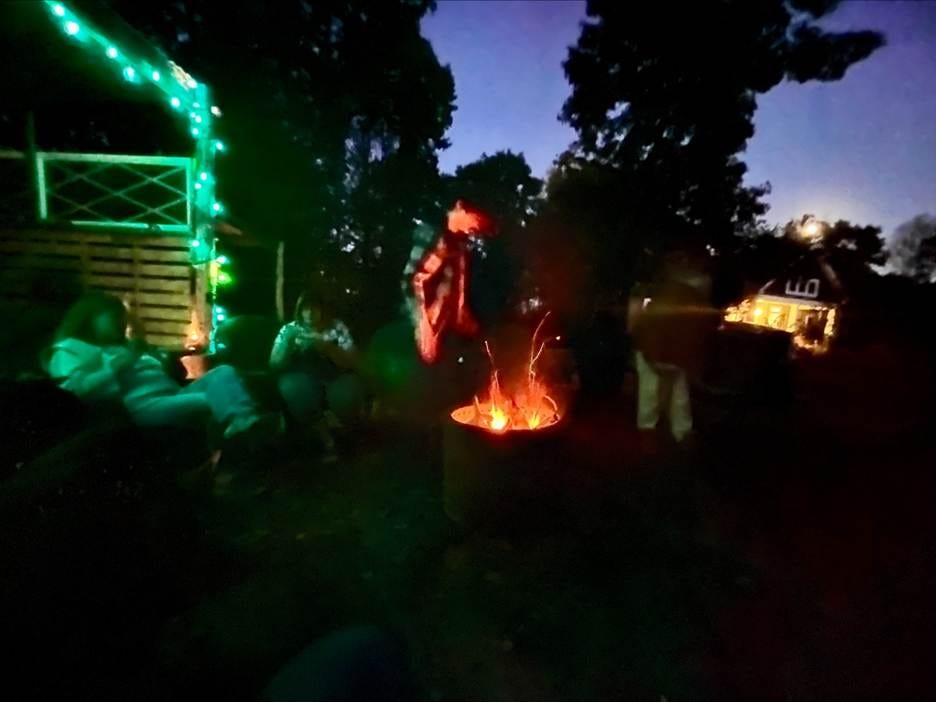
We closed our time with dessert around the fire under the moonlight, sharing gratitude for having gone on this journey together.
After my friends departed, I sat alone watching the fire die down. I found myself thinking about how many small groups of people around the world are finding their way to circles like this one that are emerging at the intersection of land, spirit, and community.
Some by way of Macy, others by way of Eisenstein, others through faith-rooted earth care or wild church movements, and many through years of earth activism.
I still don’t know what to call this emergent group of earth-rooted friends, but the words “connection,” “rewilding,” and “spirit-led” all seem important elements of what is emerging.
My spiritual journey is deeply shaped by the Christian tradition, but I want this gathering to be a much larger and more universally welcoming place.
The earliest Christians called themselves “followers of the Way,” a phrase that has long resonated with me.
So for now, I think I will call this little gathering of eco-spiritual practitioners, “Wilderness Way Collective.”
We will gather in a few different formats, from quarterly retreats to casual hikes. We will lock arms with other groups when possible, including a retreat in Texas in January and one in upstate New York in September of next year.
If you are interested in participating in gatherings of this nature, please send me a message in the comments below or via the chat function, and I will add you to our invitation list.
Deeper Dive
I highly recommend everyone watch the full dramatic presentation of Eisenstein’s More Beautiful World here.
While the fall retreat was our first official gathering, the group grew out of a book study which I wrote about here.
It sounds like a wonderful experience! Please add me to your invitation list. If timing and distance work, I just might join you in person.
Thank you for your hospitality and giving us an opportunity to slow down, connect with the world around us, and to enjoy amazing food with good company!