

“If you knew she could feel, would you stop?”
Author and activist Charles Eisenstein recounts these words of a Kogi elder, speaking about the devastation of an ecosystem during a podcast shared with me by my friend Peter Pula.
This question was never posed verbally to me, but hit me like a ton of bricks, as if a Kogi elder were whispering to me, “Hey, here’s what is actually happening in your story about your forest. Her death was killing something in you. You felt what she was feeling.”
But there was no such voice in my life in 2019 when the logging trucks rolled in.
There was just me and the narrative of separation that I can now see informed my fateful decision to cut the dying Loblolly pines under the false assumption that it was the right thing to do.
Thankfully, I felt her screams in my very bones as each individual tree crashed to the ground, crushing its neighbors.
Three days of screaming, carcasses dragged through the forest, piled high, limbs severed, hauled away.
I felt the truth. She could feel.
I stopped the suffering about halfway through the timber harvest, but I live with the grief and unintended consequences caused in those three days.
The Thread of Interbeing
Interbeing is a term popularized in English-language writing by Zen master Thích Nhất Hạnh to describe how all things are deeply connected.
This worldview is no longer a ‘theory’ or even a ‘narrative’; it is a truth that continues to shed light on my lived experience in both human and more-than-human communities.
What if the universe is not a random phenomenon but a living intelligent whole?
That question changes everything.
For many indigenous people, the Earth is not an inanimate object but a living being. Earth is our mother.
What if the purpose of humanity is “to contribute to the continued unfolding of life and beauty on Earth and in the cosmos,” as Eisenstein suggests?
What if each of us is here with our own unique gift to give or, as Howard Thurman phrases it, our own unique “sound of the genuine.”
What if awareness of our interbeing happens when we tap into the sound of what is genuine in us and find it resonating with the larger field of being?
The question that seems to be following me through multiple conversations these past few months is, if this is true, what is mine to do?
Or perhaps a deeper question might be, how might I follow the genuine in a way that contributes to the continued unfolding of life and beauty?
I think this series, which began as a revisiting of my book Power Shift, has taken on a life of its own, and in the center is that question.
The Unfolding Series
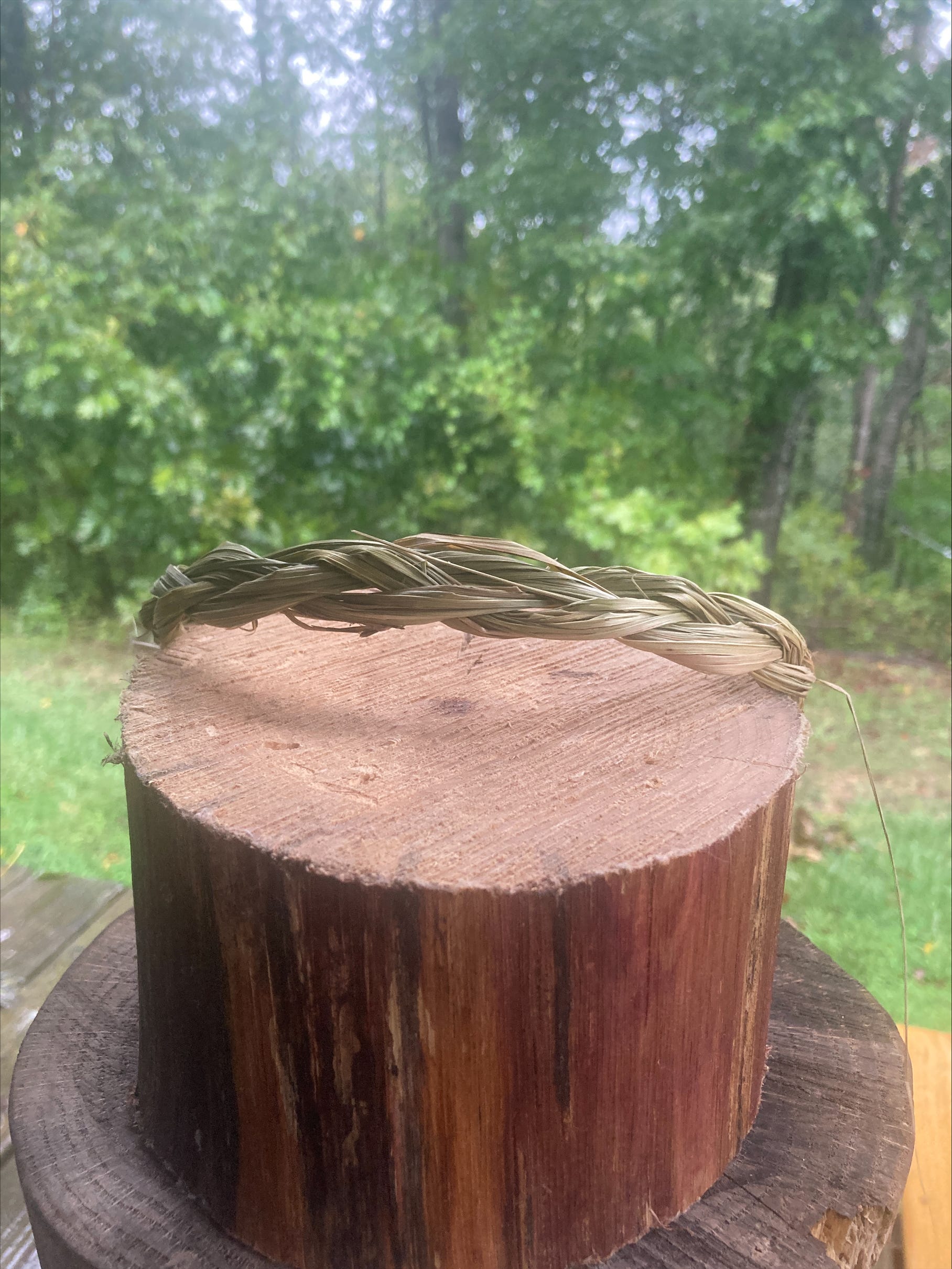
This is Chapter 3 of Part 1 of Power Shift Revisited, a 4-part series of posts exploring the intersection of human communities, more-than-human communities, and the spiritual threads that bind them together.
In Chapter 1, I shared the origin story of how I came to be a community cultivator on my way to becoming a pastor.
In Chapter 2, I shared the origin story of my calling to cultivate community in the forest surrounding my home.
In this Chapter, I am braiding these stories together with the threads of wisdom that are found in the words of some very wise ancestors.
The first thread was that of community, the second the wisdom from our more-than-human neighbors, and this third strand delves deeper into the spiritual thread that unites them.
In the story of my encounter with Stephanie, everything changed when we discovered the genuine in her, and the genuine in me were singing the same tune.
That sound of what was genuine in us resonated with the genuine in Rosalind, Brickhouse, Georgiana, Beth, Aileen, Colleen, and Karen.
We were not a collection of individuals, each independently living our best lives. We were an interconnected whole, all investing what we had in a vision that emerged out of our collective consciousness.
Like my forest, the unseen connections make us more than the sum of our parts.
John McKnight’s Origin Story
While the Asset-based Community Development movement was nowhere on my radar during my furniture bank days, I discovered ABCD shortly after we spun the furniture bank off to CARITAS, and it had an enormous influence on everything that came after.
John McKnight, the co-founder of the Asset-Based Community Development movement, wrote his first book in 1995 titled The Careless Society: Community and Its Counterfeits. This book captures John’s origin story that began during his community organizing efforts of the 1960’s. In John’s original writings, I find a few threads that speak to me differently when placed alongside my own two origin stories.
“Care is the only thing a system cannot produce. Every institutional effort to replace the real thing is a counterfeit.”
“Competent communities [have been] invaded, captured, and colonized by professional services. Through propagation of belief in authoritative enterprise, professionals cut through the social fabric of community and sow clienthood where citizenship once grew.”
“The two foundation stones of reform are economy and community.”
In 2021, I became a Steward of the ABCD Institute and had the opportunity to get to know John.
I noticed that during our ABCD Institute Stewards’ gatherings, John would often close with these words, “Remember, above all else, we are a circle of friends.”
At first, I thought that was a quaint sentiment.
After reading The Careless Society, I realized that his words were revolutionary. It was a plea from a lifelong activist reminding us to resist becoming institutionalized.
John passed away in November of 2024 at the age of 92, but his spirit still lives in the wisdom he imparted.
Throughout the remainder of this series, I will be telling stories of resistance to the counterfeit expressions of community.
While The Careless Society is on the whole a stark and disturbing analysis of the harm institutionalized care has caused, John offers this glimmer of hope:
“Thus the possible future will reach beyond allopathy, therapy, and even deinstitutionalization to what might be called recommunilization—a recognition that it is in person, place, and peers that possibilities of regenerative community occur.”
Weaving Interbeing and Community Cultivation
I am not sure where John stood on the concept of interbeing, but I do know that he firmly rejected the myth of separation.
In 2016, John teamed up with community development consultant Peter Block and Old Testament scholar and theologian Walter Brueggemann to write An Other Kingdom: Departing the Consumer Culture. They write (emphasis mine):
“Community is the reconstruction of individual well-being through the well-being of the whole. This is very different from beginning with individual self-interest and believing that the invisible hand of the market will create communal well-being.”
“What sustains the class system, the empire, and the free market narrative is the myth of individual development. We cling to the hope that it serves the common good. It doesn’t. It does serve the individual. Beautifully.”
“There are disciplines that belong to community. They are built by covenantal language held together by vow rather than barter and honor the fact that community has a job to do and needs to be productive.”
“Community is people wrapped in a mystery. Community understands through their story, which gives shape and meaning to the mystery. Story honors our common experience.”
The myth of separation is foundational to the belief that individual well-being leads to communal well-being. It assumes that society is a collection of individuals, and if we focus on the individuals, we are somehow creating a healthy whole.
This is what I have come to see: it is a lie. A faulty myth upon which most of our current crisis rests.
What I love most about An Other Kingdom is the spiritual thread woven through it, which I credit to Walter Brueggemann.
Brueggemann recently passed away at the age of 92, on June 5, 2025, but his words of wisdom continue to speak.
Economy as the Reinforcing Strand
Eisenstein names our cash economy as both the product and the driver of the myth of separation.
The alternative to our current cash-driven economy is the gift economy.
The gift economy is the currency of genuine community.
The gift economy was the lifeblood of my original community cultivation efforts. No paid staff, no professional case manager, no lease agreements or grant-funded programs.
No pressures to scale, standardize, and grow.
Then, I started listening to outside experts.
They looked at our little fledgling community through the lens of separation.
What I saw as beautiful, they named as deficient.
I naively entered the cash economy built on the narrative of separation, not consciously, but slowly buying into the lie that what we were doing was not enough.
I started raising money, hiring staff, renting space, and purchasing a box truck, all based on the lie that growth was the only option.
Rather than a story held together by vow, covenant and mystery.
We were governed by paychecks, policies and procedures.
Success was not the sharing of gifts and the discovery of shared dreams.
Success was the number of families served.
The gift economy took a backseat, and the beloved community vanished as individual donors, foundation grantors, and organizational growth gurus took center stage.
These growth-focused stakeholders encouraged me to apply the rules of industry — to scale, systematize, and standardize.
To brand, sell, and compete for my position in the non-profit industrial complex.
None of this grew out of what was genuine to those who helped bring life to the effort.
Stephanie, Rosalind, Brickhouse, and Georgiana all loved the small, intimate community culture that was so nurturing. The kind of community where we had time to eat fried chicken on the church stairs, sharing stories, tears and laughter.
It was outside expectations overlaid on top of that beautiful organic structure that smothered the sound of the genuine.
But truth be told, it was my accounting background, my ego, my ignorance of the consequences that allowed it to happen.
I killed what gave it life.
At the time, I did not hear it scream the way my forests’ pain pierced my heart as the chainsaws ended their life.
Instead, the beloved community simply shriveled and died a slow death.
I made the decisions I made because I was caught up in the dominant narrative of more is better - grow, measure, scale, hire, create institutions that measure the tangible outputs.
My accounting background served me well as my pastoral aspirations vanished from view.
The intangibles like friendship, belonging, and purpose were all washed away.
Had I known John and Walter, I suspect they would have asked me, “If you knew the life force was in the connections, would you have severed them?”
Shifting out of a dominant narrative of separation into one of interbeing is not something you do once.
It is a continual struggle in a society that can’t see that the connections are where the mystery lives.
We live in a culture that is so used to counterfeits that it cannot recognize the genuine.
We breathe in the air of a society that sees individual pines as products and misses the forest ecosystem.
We listen to philanthropists who see the need for furniture and not the importance of relationships of genuine care.
We all need wise elders asking those challenging questions that illuminate what we cannot see when we are swimming in the waters of the dominant narrative of separation.
Living the Counter Stories
“It may be that when we no longer know what to do
we have come to our real work,and that when we no longer know which way to go
we have come to our real journey.” —Wendell Berry
When I decided to spin off the Furniture Bank to CARITAS, I was terrified.
I did not know how to recover what I had lost.
When we first began the furniture bank, we took the time to share Stephanie’s story of wanting to give back with everyone who came to receive assistance.
It inspired countless individuals to join the circle of friends.
When we lost our connection to our origin story, we lost our soul.
We lost the sound of the genuine.
I now understand that we co-opted our unique tune with someone else’s lyrics.
The narrative on interbeing reminds us that there is a spiritual nature to community.
The spirit of a community is revealed through the stories it tells about itself and its role in the larger narratives of our society.
Howard Thurman says when we find the genuine in ourselves and in others, “the wall that separates and divides will disappear and we will become one because the sound of the genuine makes the same music.”
I felt the oneness in my journey with Stephanie and that early furniture bank community.
I felt and continue to feel the interbeing in my relationship with my forest as I watch it regenerate itself with far more compassion and grace than I ever could have imagined.
In both these stories, I was operating with a faulty narrative of separation.
In both cases, I knew something was wrong, but I lacked a name for it and a story to accompany it.
This narrative of interbeing is alive and well in many Indigenous cultures.
Many Indigenous traditions have understood humans as participants in, rather than separate from, the more-than-human world.
Interbeing is the mystery that I was longing to experience the night I met Stephanie.
It is the “magic” that I found in my Celtic spirituality class when I discovered that trees, rocks and streams could communicate and share their wisdom.
It is the “mystery” that Brueggemann wrapped into his community definition.
It is the thread I can now see running through stories I once thought were separate.
This narrative is so very foreign to those of us shaped by a Western worldview.
Even Eisenstein shared that he was fearful others would think he was weird, or that he would sabotage his credibility by hoisting his “freak flag a little too high.”
I have always been drawn to the mystics – those spiritual freaks who flew their flags high!
Perhaps that is what is called for in such a time as this?
I like Victoria Loorz’ definition of mystic as “someone who has an experience of union with The One—and The One may be God, it may be Mother Earth, it may be the cosmos.” She defines nature mystics as “those who experience the presence of the sacred through nature.”
The first time one of my seminary professors ascribed the word mystic to me, I was terribly insulted.
I thought it was a way of naming my freakiness while suggesting I was not intellectual enough in my spiritual pursuits.
Thurman was often labeled a mystic. I suspect he would wear that label with honor. He wrote, “There were times when it seemed as if the earth and the river and the sky and I were one beat of the same pulse.”
I doubt John would call himself a mystic, though he was a deeply spiritual man with a prophetic edge.
Brueggemann would likely have preferred and earned the label prophet.
When I put the lenses of these ancestors side by side, they bring my own story into view.
They help me see that for me, the path of the mystic is becoming a path of interbeing.
It is a way of seeing connections that many miss.
But the ancestors did something I did not expect as I was writing this article.
They illuminated a third community.
One that exists beyond the human and more-than-human dichotomy.
In some indigenous cultures, this might be understood as the community of ancestors.
Christian communities might call it the communion of saints.
The Bible refers to this invisible community as a cloud of witnesses.
I think very little about the interbeing that exists with the souls that have gone before.
But, perhaps there is a layer of this expanding definition of community that I need to remain open to.
Does the spirit of the ancestors live on in their stories?
Many spiritual traditions and Indigenous cultures have understood this to be true.
So perhaps as I ponder interbeing, it is not only with my fellow humans who are on this earth today, but includes all the more-than-human world, as well as all that have come before and perhaps after me.
I bet you did not see that one coming….neither did I!
The deeper I dive into this narrative of interbeing, the more it all makes sense.
It is the same music that Joanna Macy, an American environmentalist, author and scholar sang before she joined the choir of saints earlier last year.
I hear echoes of it in Wendell Berry’s poems, which continue to sing to us.
We have lost so many wise elders of late.
Perhaps we need this expanded understanding of interbeing to see their invisible presence.
In their wisdom, this truer narrative of interbeing has echoed through the generations.
It is all connected.
It is not random.
It is intelligent.
It sings the same song, generation after generation.
Different words, but the same message.
It is beyond naming.
It cannot be contained in a single narrative.
Yet, it is one.
Deeper Dive
The quotes and references from Charles Eisenstein were taken from Episode 232 of The Great Simplification with Nate Hagens titled The Collapse of Our Mythology: Can Humanity Choose What’s Next?.
If this kind of deep-dive exploration feeds your soul, I highly recommend Peter Pula’s weekly facilitated conversations. He provides a prompt on his publication Indiewylder, which is always insightful. However, the conversation takes on a life of its own thanks to Peter’s generative facilitation style. It is my favorite source of inspiration both as a writer and a community cultivator.
Peter will be featuring the first three chapters of my Power Shift Revisited series during the October 1st conversation. You can register here for this free and highly interactive offering.
If you have enjoyed these first three chapters and want to help craft Chapter 4, be sure to join us for the Oct. 1st conversation or add your thoughts in the comment section below. I hope you will consider adding your voice to this unfolding narrative!
This is the third post in my Fall Power Shift Revisited series.
Previous posts in this series include Embrace the Community and Embrace the Forest.
If you enjoyed this post, I hope you will consider subscribing, adding your thoughts in the comment section, and sharing this post with others.
All materials on my site are free, and 100% of any paid subscriptions are donated directly to Embrace Communities, a public charity.