

As I rang the doorbell, I wondered if the person who opened it would be a safe person or someone who could harm my family. I had not spoken to Bonnie since we graduated from college in 1988, other than her kind and compassionate phone call last year when my son was ill, we had no contact.
While we ran in the same group in college, we were friends but not BFFs. But I had promised to visit her the next time I was in Texas, and something deep inside me told me she, more than most of my Texas friends, could understand the journey my family had been on over the past decade.
I knew Bonnie was a faithful churchgoer, but more importantly, I knew she was also the mother of a transgender child living in an ultra-conservative rural community in Texas. I knew nothing of her political leanings. I feared hearing some twisted justification reconciling support for those who would harm her child and mine, backed by a dangerous and faulty theological foundation built on the hideous belief that “loving the sinner and hating the sin” would somehow bring comfort to those whose identity was labeled sinful. I had asked around to see if those I knew who were kindred spirits had any idea of her political and religious leanings. They all assumed she was in the majority - a religious conservative and firmly Republican.
She opened the door and embraced me, and the 40-year gap closed. We spent the next 30 minutes dancing around the theological and political elephants, and I breathed a sigh of relief when she said, “We left our old church when we realized their understanding of God’s love did not extend to our son.”
She then shared that, like me, she was an independent voter and voted based on the person and not the party. Adding that she could never support any candidate, Republican or Democrat, who did not align with her beliefs and values. Now feeling fully safe, Bonnie and I spent the next several hours together sharing the 40 years of life we had missed out on.
I find the level of fear I feel in my home state deeply disturbing. I never dreamed political and theological divisions would feel so sharp and defining. What is so interesting to me is that only two of the five independents that I know in rural Texas, none of whom support the current administration, feel safe enough to speak their truth. Most remain silent for fear of economic or social harm. I feel the same fear as I anticipate publishing this post.
It made me wonder about other women in the deep red communities and those sitting in ultra conservative churches: How many stay out of fear, obligation, or denial? How many are true supporters of the current administration’s policies on immigration? How many buy the lie that those in the queer community are somehow the cause of moral collapse in our nation and a threat to traditional family values everywhere?
I wonder if those who choose to use the LGBTQIA+ community as a scapegoat understand the power of a mama bear when you come for her cub?
Bonnie and I were both raised in rural southern culture. We were taught it was unladylike to talk about politics and that we should leave theological discussions to the menfolk. I think the current push toward the strong male head of household in conservative Christian circles, teaching women that they must submit to their husbands, is banking on this indoctrination to keep rural southern women in their place. They have poked the wrong bear, and they have no idea how strong we can be when we find each other.
I wonder if that is why this interview with Texas State Representative James Talarico was censored? One of my independent-minded Texas friends sent me a YouTube video of this interview via Facebook Chat. I wonder how many others received this link subversively? My favorite line in this interview is, “There is nothing Christian about Christian Nationalism.”
If you are a fiercely independent rural southern woman and refuse to hide under a rock while the current administration plots to harm those we love using our faith as a weapon, making us accomplices in our own families’ and nations’ destruction, I just want you to know, you are not alone! If you feel unsafe, I get it. If you want to connect with others who are trying to be brave while still being scared, shoot me a private message. I also invite you all to pray for fiercely independent individuals everywhere, no matter how they vote. Pray we all vote with a commitment to our values and not based on the expectations of others.
I chose the name Walking with Wildflowers for this publication because of my desire to unite wild-spirited people who are willing to take risks of blooming where they are planted, even if that place feels like rocky or toxic soil, and even if they have to do so incognito.
Rural independent women are some of the wildest of flowers I know. Our Mamas didn’t raise no fools, and a country girl will not only survive, but can thrive in all kinds of cultural and environmental conditions.
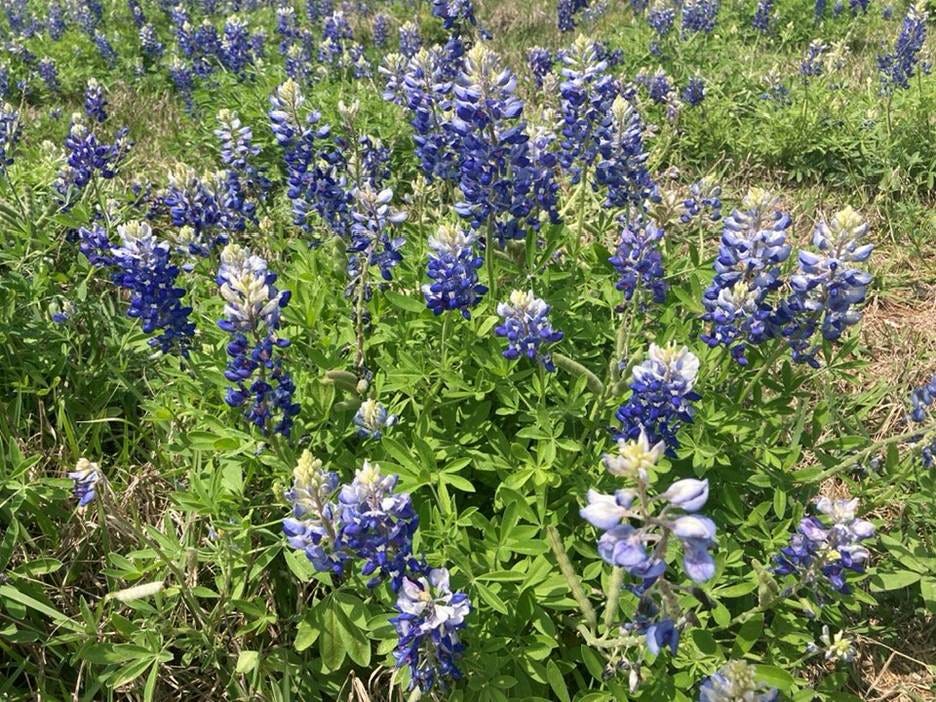
When I think of the southern independent women in my home state of Texas, I think of the bluebonnets. They are one of the most beautiful sights in my Central Texas birthplace, but they are also one of the toughest.
If you are a metaphorical bluebonnet, I am praying for you and can’t wait to see you bloom!
If you found this post helpful, I hope you will consider subscribing, sharing your thoughts in the comment section, and sharing this post with others. All materials on my site are free, and 100% of any paid subscriptions are donated directly to Embrace Communities, a public charity.
I wish I had saved the comment I just wrote, but apparently I had to create a substack account to send it. So it’s gone now. Sorry.
Briefly, I said that I like the bluebonnet metaphor, and I want to be counted as a bluebonnet. But I also like the parable of Jesus about the mustard seed, which was turned into an allegory by the early Jesus movement, that described the growth of a tiny mustard seed into a great tree where birds build their nests. But Jesus grew up in the farmland of Galilee. He knew that mustard seeds didn’t become great trees. They become wild, prolific bushes that create havoc in an agricultural area. The farmers hate them. They make tending the crops difficult, and they especially make harvesting them difficult.
But Jesus said that the Kingdom of God was like a mustard seed. The Kingdom of God is where compassion, forgiveness, healing, and raising up dominate. They choke out the judgmental good/bad, right/wrong, reward/punishment inflicted by the world to exclude people who do not meet their norms or standards.
So Jesus challenged their norms and standards. In the Kingdom of God, the norms and standards are reversed, “the last shall be first, and the first shall be last.” The Kingdom of God is where compassion, forgiveness, healing, and raising up dominate. Tribalism gives way to “Love your (Samaritan) neighbor,” “You ARE your brother’s and sister’s keeper,” we are all connected, all equally valued, all “one” with the one another, the planet, the cosmos, the Source. Even the first and the last are bound by the same tender embrace.
The Kingdom of God is like bluebonnets in a dry, barren world. But the Kingdom of God is also like tiny mustard seeds that disturb the farmers who only want to grow judgment, fear, guilt, and shame based on their exclusive values and standards. “Those who have ears to hear, let them hear. Those who eyes to see, let them see.”
I love this essay so much. I think fear is a huge part of our conditioning in conservative Christianity. And that keeps us small and quiet. But learning to live embodied and integrated and authentically is so freeing. I really resonate with your wild flowers imagery.