
Is Our Charity Toxic?: Insights from Robert Lupton
Throwback Thursday: This post was originally published in February of 2012.
This post is part of my Throwback Thursday series. Through this series, I am bringing over the most popular posts from my WordPress blog, View from the Bridge, where I published articles from 2008 to 2017, and asking for input on their relevance to today. If it is something you think is worth revisiting, let me know in the comments below.
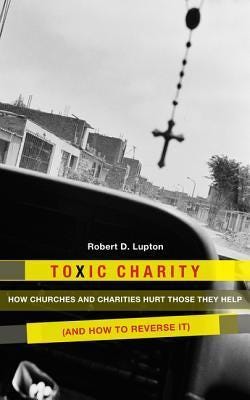
I love people who are bold enough to tell the truth, especially when the truth will mean rocking the boat. Robert Lupton is a bold truth teller in his book “Toxic Charity: How Churches and Charities Hurt Those They Help (And How to Reverse It."
Below are just a few excerpts from Lupton’s book that capture the heart of what he sees as the problem with our current approaches to poverty alleviation:
When we do for those in need what they have the capacity to do for themselves, we disempower them.
For all our efforts to eliminate poverty—our entitlements, our programs, our charities—we have succeeded only in creating a permanent underclass, dismantling their family structures, and eroding their ethic of work. And our poor continue to become poorer.
And religiously motivated charity is often the most irresponsible. Our free food and clothing distribution encourages ever-growing handout lines, diminishing the dignity of the poor while increasing their dependency.
Giving to those in need what they could be gaining from their own initiative may well be the kindest way to destroy people.
Why do we miss this crucial aspect in evaluating our charitable work? Because,as compassionate people, we have been evaluating our charity by the rewards we receive through service, rather than the benefits received by the served. We have failed to adequately calculate the effects of our service on the lives of those reduced to objects of our pity and patronage.
We respond with immediacy to desperate circumstances but often are unable to shift from crisis relief to the more complex work of long-term development. When relief does not transition to development in a timely way, compassion becomes toxic.
Most work done by volunteers could be better done by locals in less time and with better results.
As a country, we understand that welfare creates unhealthy dependency, that it erodes the work ethic, that it cannot elevate people out of poverty.
Again and again we are finding that when it comes to global needs in organizational development and human development, the granting of money creates dependence and conflict, not independence and respect.
Wherever there was sustained one-way giving, unwholesome dynamics and pathologies festered under the cover of kindheartedness.
Doing “for” rather than doing “with” those in need is the norm. Add to it the combination of patronizing pity and unintended superiority, and charity becomes toxic.
The challenge for those of us in service work is to redirect traditional methods of charity into systems of genuine exchange.
Mercy without justice degenerates into dependency and entitlement, preserving the power of the giver over the recipient. Justice without mercy is cold and impersonal, more concerned about rights than relationships. Relationships built on need are seldom healthy.
When a church makes decisions about serving others, are the ones being served the urban poor or the church?
Someone needs to raise the question, Is the church enabling missionaries to minister, or are the missionaries serving the needs of the church?
Top-down charity seldom works.
Lupton gives these suggestions to those seeking to empower people and not create dependence:
Don’t subsidize poverty.
Reinforce productive work.
Create producers, not beggars.
Invest in self-sufficiency.
Lupton acknowledges that, "The hard part is rethinking the entrenched giveaway mentality and restructuring an established one-way charity system." He suggests churches and non-profits ask these questions:
Are recipients assuming greater levels of control over their own lives or do they show up, year after year, with their hands out?
Is leadership emerging among the served?
Are their aspirations on the rise?
Is there a positive trajectory?
Irregardless of your political leanings, Lupton's approach should appeal to individuals on both sides of the aisle.
I am not sure how I feel about this book and its message with 14 years of hindsight. Is this a post worth revisiting?
Are these insights from Toxic Charity still helpful to us today?
Have you applied any of these insights to your own work? If so, what did you learn?
If you were to revisit this post today, what would you change, add, call into question or affirm?
If you found this post helpful, I hope you will consider subscribing, sharing your thoughts in the comment section, and sharing this post with others. All materials on my site are free, and 100% of any paid subscriptions are donated directly to Embrace Communities, a public charity.