

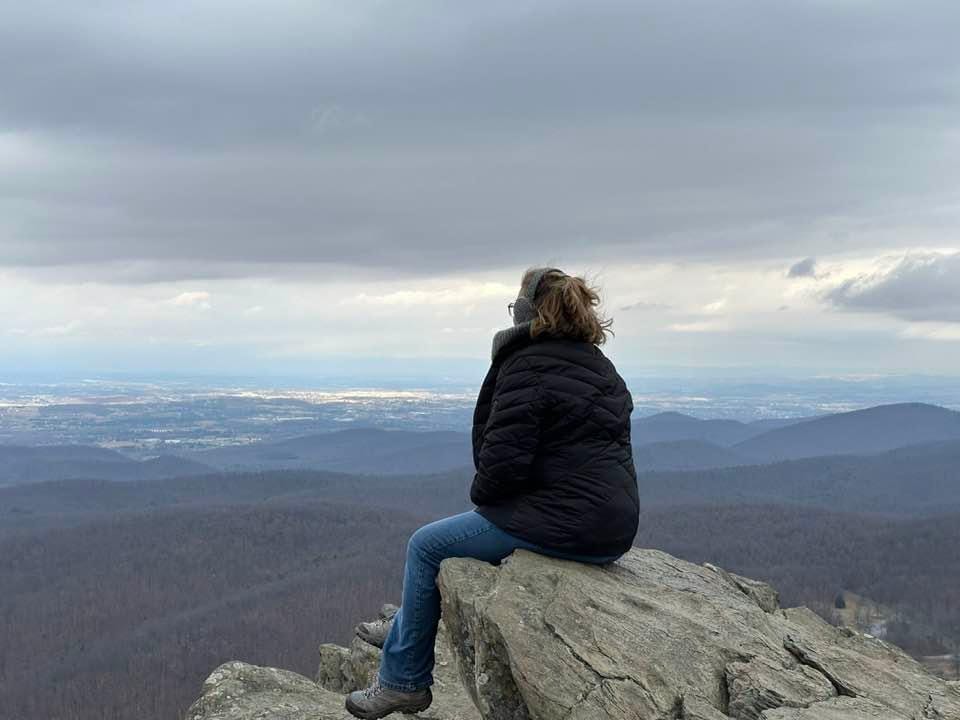
I began writing on Substack earlier this year because I wanted to explore more publicly something I had been experiencing privately for years—the intersection of spirit, land, and community.
I have long been fascinated by the connections between living systems and by the life-changing encounters I have had with both human and more-than-human guides.
What is new for me is trying to capture these experiences in real time and share what I am seeing and experiencing both personally and through my role as a community cultivator.
Sometimes, as with George, the rebellious steer, I know an experience holds some deeper significance, but I don’t yet understand what it is trying to teach me.
I find myself returning to certain encounters again and again, each time excavating another layer of meaning or seeing something I couldn’t see before.
Sometimes an experience takes on new life because of what is happening in the world around me.
Sometimes a new revelation comes through a book, a conversation, a walk in the woods, or something another human guide has helped me see.
The meaning keeps unfolding.
That is what I want to explore this fall.
Revisiting Power Shift
When I wrote Power Shift: A Field Guide for Community Cultivators Everywhere in 2020, I knew I wanted to bring my community work into conversation with what I was learning from the forest, even though its primary function has been as a training guide for my courses in Asset-Based Community Development.
When I wrote Power Shift, I was still only a forest visitor.
I had just moved into my new home, and my understanding of forest life came primarily from observing a place I was only beginning to know.
Six years later, I am no longer simply a visitor. I have become a forest dweller.
I have grown roots here.
I have spent years watching the forest change through seasons, storms, droughts, succession, death, decay, and new growth. I have also grown as a Master Naturalist and have learned some important lessons from the mistakes I made earlier in my journey with the forest community.
There is another important development.
When I wrote Power Shift, all of my community cultivation stories came from my organizing work in Richmond, Virginia. I was looking at community development primarily through an urban lens.
Over the past six years, as I have sought to grow roots in a rural community and deepen my relationship with the land around me, I am seeing community differently.
How might the lessons I am learning from the forest inform my work in human communities and vice versa?
Are all these types of communities inviting me into the same story?
These are the questions I want to explore.
Seeking Thought Partners
This fall, I will be traveling back through Power Shift with members of our facilitated learning cohorts.
But I would like to offer another co-learning option—free and open to anyone here on Substack who wants to join me in thinking through these deeper questions.
This won’t be a polished rewrite of Power Shift.
It will be an experiment with the universal nature of narrative.
I will revisit the stories and principles found in Power Shift through the lens of where I am now: at the intersection of land, spirit, and community.
And I would especially love to hear from you all along the way.
I don’t have all the answers.
Some of the most interesting insights will likely emerge through the conversation.
Our Fall Rhythm
The journey will unfold in layers.
1. Human community stories
I’ll begin with stories from my community cultivation work—like the Appomattox story I recently shared. These stories help us see community from the inside: the people, relationships, surprises, failures, gifts, and possibilities.
2. More-than-human community stories
I’ll share stories from my encounters with the other members of the more-than-human community —like George, the line-crossing steer and Lumpy the wise old Chestnut Oak.
These stories invite us to pay attention to the communities we often overlook: forests, fungi, plants, animals, soil, water, and all the relationships that make life possible.
3. Weaving the stories together
Then comes the part I am most excited about.
I’ll bring the human and more-than-human stories into conversation with one another through an eco-spiritual lens, similar to the Two Sophias post I shared last week.
I will be exploring these questions with a fresh perspective, and
I would very much appreciate having you weave alongside me.
4. Deeper Dive
For those who want to go deeper into the theory and practice of ABCD, I’ve also created a new Deeper Dive section of Walking with Wildflowers.
This is where I’ll share the more theoretical and application-focused material—the principles, paradigm shifts, frameworks, tools, and practices behind the stories.
You can subscribe to the Deeper Dive section here, to receive these posts as they are published.
All of these materials will remain free and accessible to both subscribers and non-subscribers.
Our Journey This Fall
I’ll launch this new rhythm next week, and I’m sure the journey will take some unexpected turns along the way.
For now, here’s the rough map:
September — What is community cultivation, and why should I care?
October — What are the six elements of a thriving human ecosystem, and where would the forest instruct us to start?
November — What are the most powerful forces that unite both humans and more-than-human species?
December — How do we cultivate community-led efforts that regenerate organically?
I don’t know exactly where this journey will lead.
That’s part of the fun.
For years, I’ve taught community cultivators to listen for what the community is inviting them to do next.
This fall, I’m going to try to practice what I preach by expanding my community beyond its human inhabitants to include all our neighbors, human and beyond.
Published Posts Related to this Series: Updated Weekly
Chapter 1. Embrace the Community: Community Cultivator Origin Story (Chapter 1: Power Shift Revisited 26)
If you enjoyed this post, I hope you will consider subscribing, adding your thoughts in the comment section, and sharing this post with others. All materials on this site are free, and 100% of any paid subscriptions are donated directly to Embrace Communities, a public charity.
I am looking forward to engaging with this. It is all connected! We have a lot to learn from nature. The community aspect of the forest - the trees and the mycelium - is what I loved most about Simard's Finding the Mother Tree.
Wendy, it sounds like creativity is taking root in you. I look forward to following this unfolding! And, of course, to hearing more about your work in person - soon!