

Recently, my husband and I spent time at Breaks Interstate Park on the border of Virginia and Kentucky. There were many awe-inspiring moments throughout the trip, which included a side trip to the Cumberland Gap. One thread ran through them all – the awesome power of a river over a millennium to move a mountain.
Both the Breaks, referred to as the Grand Canyon of the South, and the Cumberland Gap, were formed by rivers that slowly eroded a path through the Appalachian Mountains. The force and continual flow of water literally cut a path through solid rock.
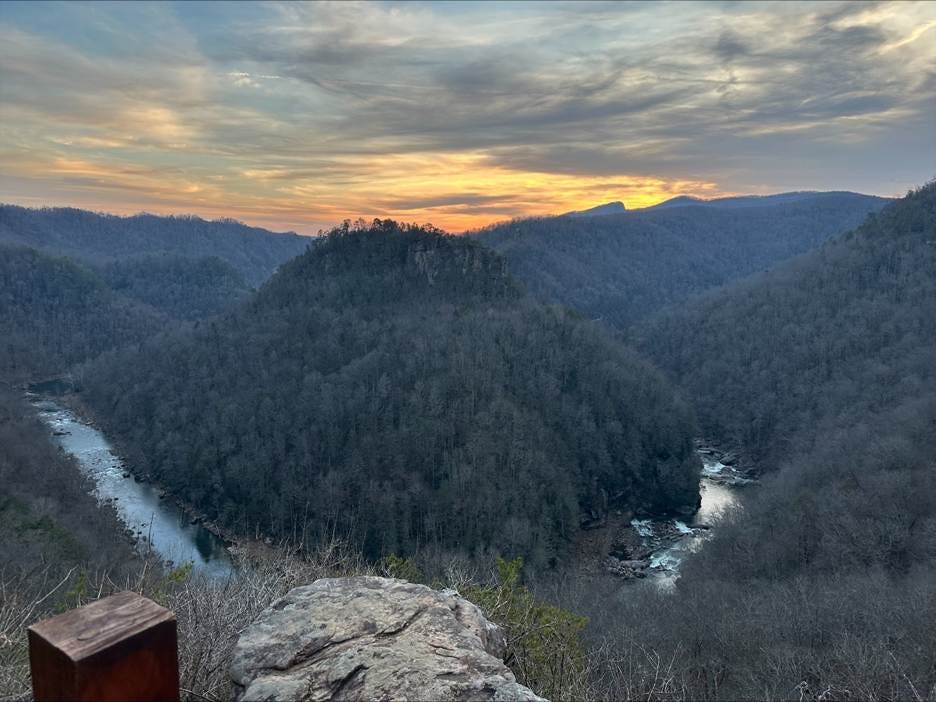
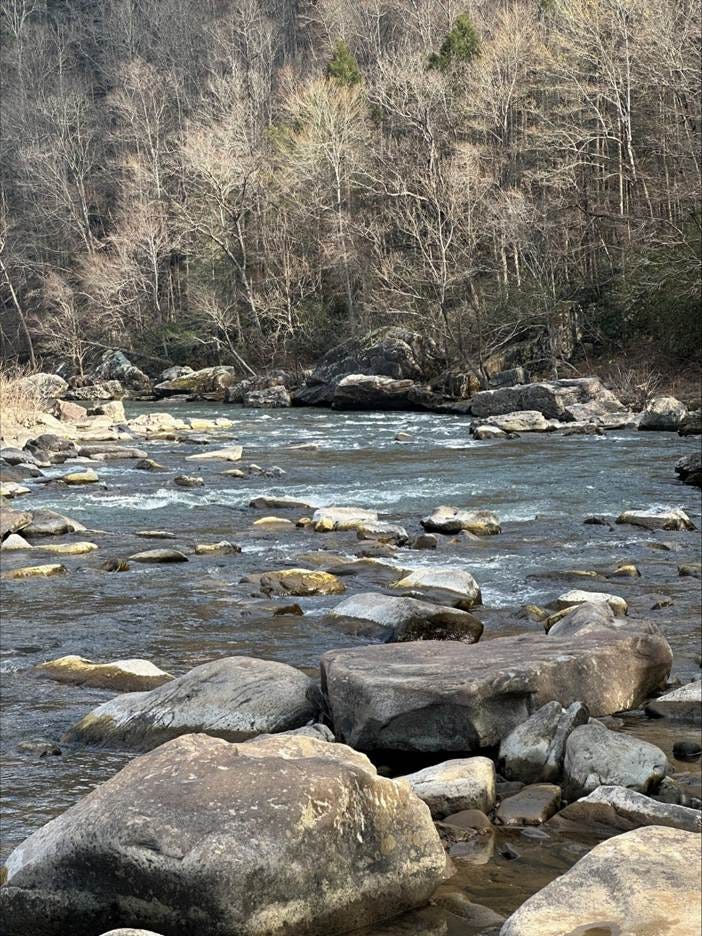
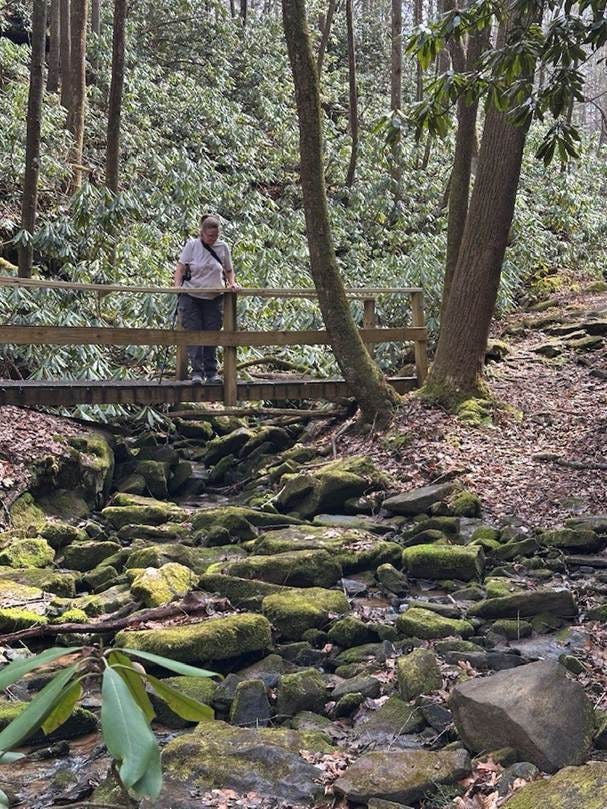
What surprised me during our hikes was that those mountain-moving rivers began as small natural springs bubbling up from underground high in the mountains. As we hiked down, the tiny streams converged and eventually joined the river at the base of the mountain. The mountain itself was feeding the river.
Mountainous Inequity-perpetuating Systems
As a grassroots community cultivator, I often feel that mountainous, inequity-perpetuating systems are undermining our work. We often feel small and powerless as we watch our communities bear the brunt of failed policies and long-term economic exploitation that we have little or no control over. I think these mountain springs, streams, and rivers have a message for us.
Jody Kretzmann, the co-founder of the ABCD Institute, remarked, “ABCD is necessary but not sufficient.” What I have seen is that asset-based community-driven efforts, while powerful at the grassroots level, are insufficient to bring about systems change. My friend and fellow ABCD Institute Steward, April Doner, has convinced me that these larger challenges require the convergence of a multitude of movements with shared values engaged over long periods of time.
While asset-based, community-driven efforts always start at the neighborhood or community level and aim to grow the power of community members, many of the adjacent movements that I am watching bubble up are coming from within the mountains of institutional structures themselves. Systems like healthcare, education, government, religion, and the economic system.
Institutions are made up of people, many of whom are longing for new ways of being in relationship with communities. These innovative individuals within these institutional structures, particularly those who are on the frontlines standing in the gap between the institutions and the community, are finding each other and creating alternative, more life-giving structures.
One of my goals during my travels is to bring these various streams together, which is something we are doing through our Richmond, Virginia, regional meet-ups. While the long-term goal of shifting systems may not happen in my lifetime, the immediate outcome of my travels has been that those who participate in these conversations no longer feel small and powerless. As past social movements have demonstrated, together we can move mountains!
What’s Springing Up in Richmond, Virginia?
Last fall, I began a bi-monthly convening of pioneering leaders from Richmond, who, through their institutional roles, have tapped into springs of hope by applying the principles of asset-based community development. All these leaders were shaped by various adjacent movements that are emerging from within their respective systems of government, healthcare, ministry, and education.
These four pioneering institutional leaders have formed the core team of our emerging Richmond Community Cultivator Network:
1. Stephanie Toney – founder and Visionary of CHW Strength and the CHW Strength Foundation. Stephanie has formed a rapidly growing worker-owned cooperative for Community Health Workers across the region and beyond. The Community Health Worker movement has been gaining energy as an economically sustainable, culturally responsive, equitable alternative to the traditional healthcare system.
2. Katie Gooch – director of the Pace Center on the campus of Virginia Commonwealth University. Pace has implemented some of the most impressive student-led ABCD that I am aware of. Katie has completely reimagined campus ministry through a community-building lens and leveraged her vast network of ecumenical congregational support in innovative ways. Katie is tapping into a movement of shifting ministry from pastoral leadership to community-driven care and has been wildly successful with over 1,000 students per semester participating in the roughly 20 student-led activities per month at The Pace Center.
3. Matt Slaats – Matt coordinates the Virginia Solidarity Economy Network and has launched a worker-owned cooperative incubator and ecosystem-building network to support worker-owned cooperatives across the State of Virginia, called Common Shares. Matt also works for the Richmond city government and helped bring participatory budgeting to the city. Through this effort, Matt and his team have developed extensive connections with community leaders across the city. Matt has been shaped by a variety of movements focused on strengthening democracy and creating economic equity.
4. Wendy Lively – director of programs at Communities in Schools in Chesterfield County. Wendy was the first to bring an ABCD effort into high schools in the region. While CIS is a more traditional non-profit, the culture of collaboration and innovation is baked into its culture. The movement toward greater community engagement in public education has been gaining momentum for decades, with particular focus on helping students move into college and career.
As a facilitator with 20+ years of experience working at the micro-community level, my desire was to figure out how ABCD could be used as a tool for systems change.
Could these four springs combine in a way that promotes grassroots-level community-driven action across the region?
Could that shift slowly shift the larger systems, such as healthcare, education, and economic systems?
What other values-aligned groups are in this region working toward these same objectives?
Our collective task over the past few months began simply with listening to one another. Our most recent conversation was an invitation to lean into the intersections in our work. Below is a quick summary of where we see the potential for convergence.
Two Emerging Streams of Convergence
Worker-owned care cooperatives as a method for promoting community health.
Community health is a very broad term. For Stephanie and her network of Community Health Workers, it is not an exclusionary term limited to those who have graduated from her CHW certificate program, but one that can hold the diverse ways in which individuals work with the community to strengthen it, both as community members and as paid professionals. Matt’s expertise with worker-owned cooperatives and his network of worker-owned cooperatives, combined with Stephanie’s growing network, is a promising stream of activity that could, in time, undercut the exploitative and inaccessible ways in which community-based care is currently delivered.
Vocational mentoring for youth and young adults by experienced professionals.
Two approaches emerged from this conversation.
The first is a low-barrier mentoring approach developed by The Pace Center. Students are paired with mentors from local congregations in the field they are interested in learning more about. Mentors are invited to meet with students twice a semester to answer students’ questions about their career path. If the mentors and mentees choose to keep the relationship going beyond those two meetings, they are welcome to, but there is no obligation to do so. As we talked, this question emerged:
Could both Pace’s ABCD adaptation to a school setting and their mentoring methodology help Communities in Schools in their efforts to support high school students as they prepare for college and career?
The second intersection is related to helping non-college-bound students find viable career pathways. The Community Health Worker field is not based on the level of degrees one has earned but on the level of cultural competency, commitment, compassion, and capacity that one brings to the community. You will find a wide range of educational backgrounds, from GED holders to those with advanced degrees within the CHW field. CHW Strength offers a certificate program that is accessible to high school students of all means.
How might CHW Strength partner with CIS to expose students to careers in public health?
What struck me about these emerging streams of collaboration is that they both open pathways for economic advancement, especially non-traditional paths that are not dependent on large corporations, high-dollar grant funding, or financially out-of-reach degree paths that economically handicap recent graduates.
It is still too soon to know if this fledgling stream will move mountains, but my experience in cultivating this convergence in Richmond gives me hope.
Cultivating these kinds of collaborative intersectional networks takes a lot of time and intentionality. This work is often not funded through traditional means, which is honestly a good thing since traditional funding often perverts the process. I am blessed that Embrace currently has the resources to fund my efforts to cultivate the connections, and that the partners named above see the value of investing their own time in this process.
How You Can Join In
Pray: If you are a person of prayer, pray for all the springs of hope that are emerging across the globe. Pray for the joining of forces and the emergence of mountain-moving, system-shifting, equity-producing rivers. Pray specifically for Stephanie, Katie, Wendy L, Matt, and me as we figure out how to combine our energies in a way that creates communities of hope and economic opportunities that are regenerative.
Join: If you are a community cultivator who is looking to connect with others in the Richmond Region, send me a private message or leave a comment below with the community you are in and a brief overview of the kind of community work you are doing. I will be happy to invite you to our next meet-up scheduled for April 30th.
Give: I have linked to all the organizations in this article. If you are passionate about the work of these partners, please donate to them so they can continue the good work they are doing. If you would like to support the work of bringing such groups together, please consider donating to Embrace through a direct donation here or by becoming a paid subscriber to this publication. I am donating 100% of the proceeds directly to Embrace.
Volunteer: If you live in the Richmond area, both Pace and CIS work with volunteers. Reach out to them and let them know what gifts you would like to share with their students.
Connect: My travels are taking me up and down the East Coast and from Texas to Canada. If you know of other groups that are doing values-aligned work, either using ABCD or ABCD adjacent approaches, please let me know. I will attempt to visit during my upcoming travels.
While my focus is at the ground level in communities along the eastern part of the United States, Stephanie is also on the road visiting communities. I am also partnering with Heather Keam in Canada, and April Doner across the United States, as well as fellow stewards at the ABCD Institute who are working across the globe.
Through her work at Next Systems, April is making these invisible underground movements more visible and is helping to connect them, as she did when she introduced me to Matt Slaats, who has become an important contributor to our efforts to nurture convergence in Richmond, Virginia. If you are interested in this movement mapping element of this effort, let me know, and I will be happy to introduce you to April.
My Travel Plans
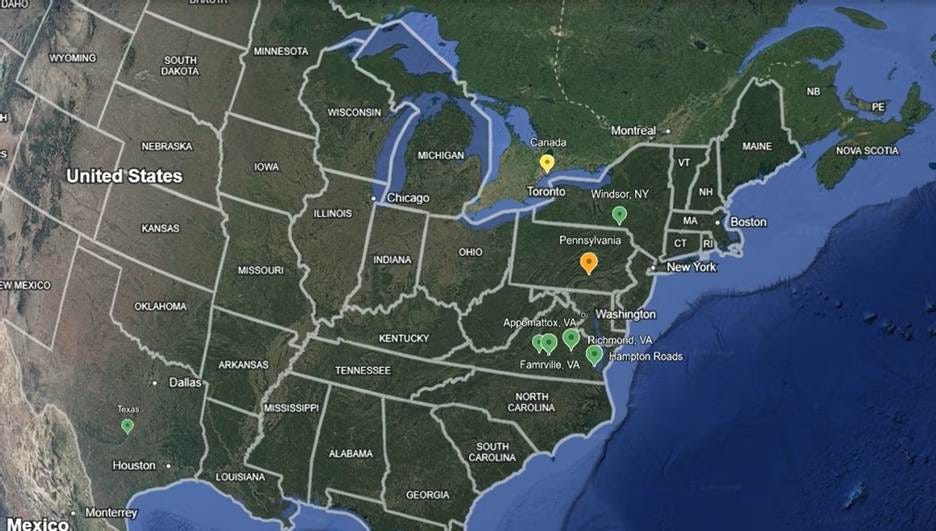
This post is a part of our Field Notes Series. As I write up my learnings from each community, we will be adding them to our map and linking to past stories for those who would like to follow their progress. Green communities are those that I have visited and have captured stories here on Substack and anticipate follow over the next year. Yellow communities are those with active ABCD efforts that I have not yet visited but am actively coaching others in, and orange communities are those with potential stories that we are following and hope to visit by the end of the year.
1. Richmond Region – Next Meet Up April 30th
February 18th Meet Up – This Post
April 30th - Next Meet Up
2. Texas – Returning January 2027
February 7th Meet Up – Story Coming Soon
January 2027 - Next Meet Up
3. Farmville Region- Ongoing Engagement
January Meet Up – The Ups and Downs of Community Development
March 24th - Next Meet Up
4. Hampton Roads Region - Next Meet up March 31st, 2026
March 31st - Next Meet Up
5. Appomattox Region – Launching March 2026
March 15th - Story Coming Soon
6. Toronto, Canada – Visiting July 2026
7. Pennsylvania – Visiting Summer and fall 2026
8. New York – Visiting Fall 2026
If you live in one of these communities and would like to connect next time I am in your area, please let me know!
If you enjoyed this snapshot of our efforts to connect regionally, I hope you will consider subscribing, sharing your thoughts in the comment section, and sharing this post with others. All materials on my site are free, and 100% of any paid subscriptions are donated directly to Embrace Communities, a public charity.
As I looked at your first two photos, I kept thinking about the multiple people I know who would see nothing there. They would call it plain, boring, grey, nothing worth seeing. If pushed, they might admit that the sunrise is pretty and that, yes, there are a few green leaves here and there, but they would stick to their opinion that it isn't pretty.
In contrast, I see color everywhere. I admire the supporting structures of future beauty. I delight in the lacework of branches, the solidness of boulders, the energy of water, the nuance of light. It isn't the beauty of a fully leafed out summer forest or colorful fall, but there is beauty worth seeing.
That got me thinking about how people can have such a set vision for what good, successful, happy communities look like that they are unable to see that the structures of those things exist even if they have not yet come into fullness. They are so focused on what they want to be that they are unable to see what is. They yearn so much for their vision that they can't notice the work happening to create that vision and when then can't notice, they can't participate.
The question is how to to open people's imaginations to see beyond what they have decided is all there is. I think fiction can do this exceptionally well. Narrative non-fiction is another method. Education helps, too.
The education piece is part of why I am so excited to do community events as a Master Naturalist. When something has a specific name (e.g. Loblolly Pine vs. pine or tree), it has more meaning. When we know that violets are essential for skipper butterflies to survive, the violet has a purpose. When something has meaning and purpose, it has value. When we value something, at minimum, we don't work to eliminate it. At best, we work to preserve it.
And now this has turned into an comment long enough I could have written my own post.
I appreciate this SO much Wendy. It's wonderful to see the streams of connection and hours of conversation we've had over the last few years turn into these tangible bonds of shared action and experimentation in REAL places. I really love seeing you push forward with this weaving mission and am learning from how you are documenting it along the way. So instructive to us connectors of all kinds, and to anyone looking to use a creative approach to advancing our societies and communities forward into a future we actually want.
And THANK YOU for the shoutout out me, and to Next System! I think the Next System Teach-Ins can be a great way for others to think about inviting various streams together in their communities or regions. I had a great time planning ours here in Chicago last year and it's exciting seeing what folks are beginning to imagine toward the next global wave in April 2027. It's a great excuse and impetus to start weaving! Feel free to send folks my way, we'll be having organizing calls every other month to support brainstorming and planning for local organizers and organizing teams. :)
More info on Teach-Ins: https://nextsystem.org/call-to-teach-ins/
And here's a video from our teach-in here in Chicago. We used a few fun tricks to set the stage for quality relationship building and connection across the orientations people came in with: https://youtu.be/dfS1AmXAsFE?si=12XxGJUhXPBdNH0x