

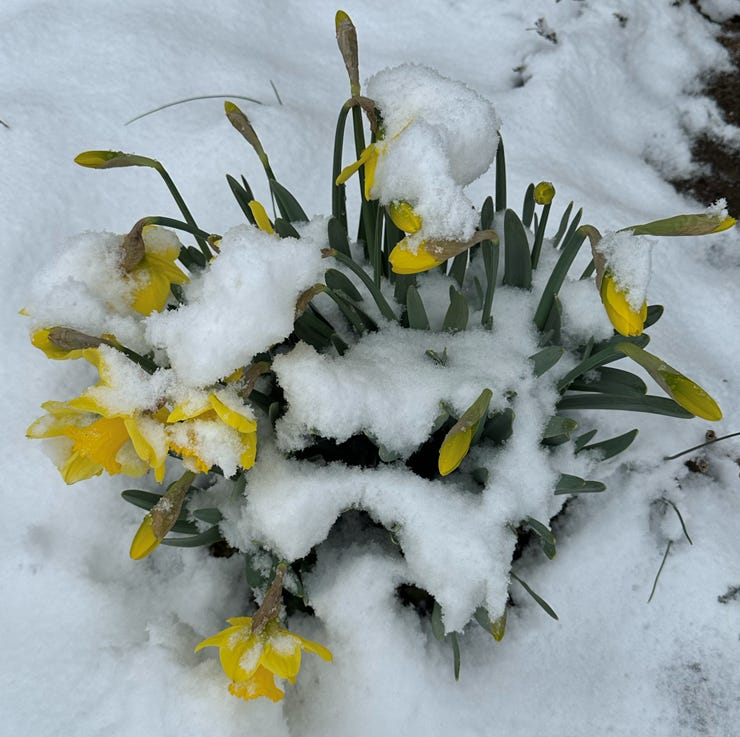
I have never been a big fan of cut flowers. When they die, and I have to toss them out, it makes me sad. Years ago, I made the switch to live flowers for gifts and asked my family to do the same for me. I purchased the daffodils in the photo above for my daughter’s graduation many years ago. When they died back, I planted them next to a tree on our land in Appomattox.
In 2019, when the bulldozers came to prepare our land for the construction of the house, they pushed over the tree and scraped off all the topsoil to build the foundation for our house. I found my daffodil bulbs tangled in the root ball of the tree weeks later. I put them in a pot, and when the house was completed, I planted them in the flowerbed closest to the front door.
Over the years, I have added other varieties of daffodils, some pink tulips, and some purple hyacinths, which now form a beautiful parade of color throughout spring. I love the color of the tulips and the smell of the hyacinth. However, if I had to pick my favorite, it would be this common yellow daffodil because year after year, it is the first patch of color proclaiming spring is on the way.
I also love how these bulbs survive being transplanted. This year, my dog dug them up and kicked them all over the flower bed. I reburied them, and here they are, blooming as if they had never been disturbed.
I know at this point my Master Naturalist friends are shaking their heads and wondering, “Does she not know that those are NOT natives?” I actually had never paid any attention to the community of origin for my flowers until I became a Master Naturalist in 2020. The more I learn about the importance of a species’ origins, the more parallels I see to my work cultivating human communities.
For most of my adult life, I have been a daffodil. I have been transplanted, uprooted, and ripped out when I thought I was done moving and abandoned in a heap of mess. I got used to being the “new family” - a neighbor, but never a native.
Native, Cultivated, Naturalized, and Invasive Plant Species Defined
For those of you who are new to the whole categorization of plant species, here are a few helpful definitions.
Native Plants: species that occur naturally in an ecosystem without human intervention. They have evolved, adapted, and co-evolved with local wildlife, soil, and climate conditions over thousands of years. They are essential to the functioning of an ecosystem, providing food for native insects, wildlife, and performing specific functions needed for the whole ecosystem to function.
Cultivated Plants: Those grown and cared for by humans. Often bred for their aesthetic qualities rather than their ecosystem benefits. Since they did not co-evolve with native insects and wildlife, they are less beneficial to the ecosystem.
Naturalized Plants: non-native species that have established self-sustaining populations in the wild without human assistance. Naturalized species coexist with native species and cause no ecological harm. They have existed in the wild long enough that they perform many of the functions of a native species.
Invasive Plants: non-native, aggressive species that spread rapidly and damage native ecosystems.
So, what universal lessons can we draw from the natural world to help us cultivate healthy human communities? Let’s take them one by one.
Centering the Natives
I love butterflies, so when I wanted to plant a pollinator garden, I quickly discovered the importance of host plants. Many pollinators are specialists; their caterpillars can only eat specific plants. For example, Monarchs need milkweed, Spicebush Swallowtails need Spicebush or Sassafras. If you don’t have host plants, you will not have butterflies. These host plants are those that co-evolved with the native pollinators.
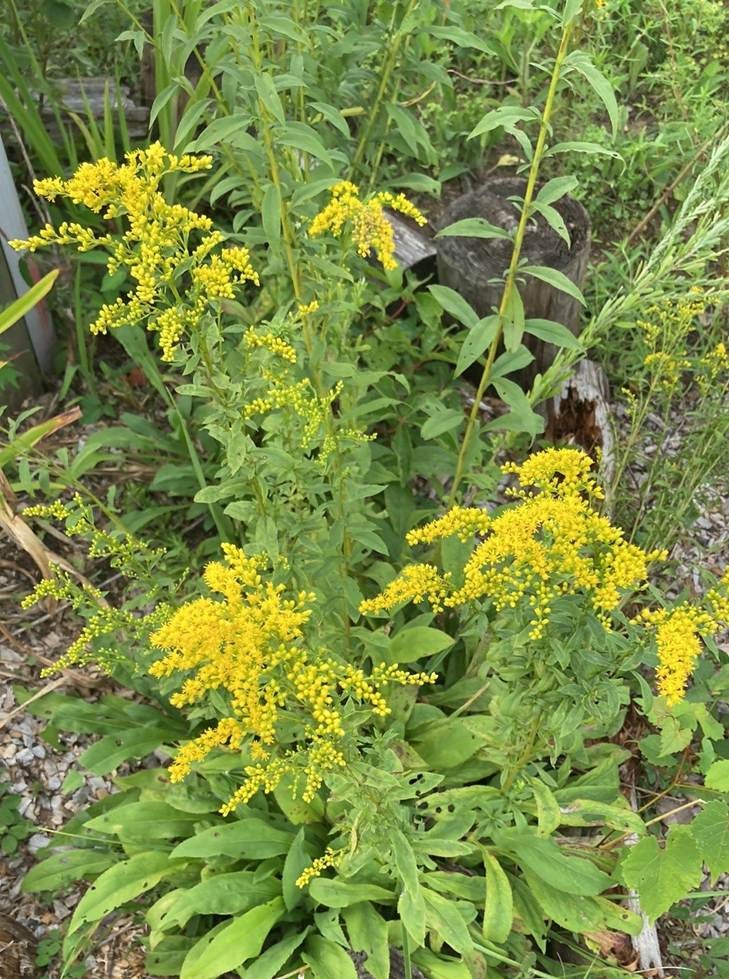
The vast majority of my front yard is made up of pollinator beds. Those pollinator beds are home to many varieties of native plants. Some were purchased from native plant nurseries, some were gifts from fellow Master Naturalists, some were dug up from other parts of our land and transplanted, and a few were grown from seeds I harvested from public roadsides or were gifted. However, the species that have thrived the most are those that simply volunteered. Like magic, they just appeared as though the universe knew I needed help. The most prolific of these volunteers is the Goldenrod.
Whether you are planting a pollinator garden or cultivating a human community, your most precious community members are your natives. These longtime residents who are deeply rooted in a place are in it for the long haul and have built relationships of trust that have endured over time. The natives understand the history, culture, and stories that are key to unlocking the community’s future chapter.
Any good cultivation effort should be majority natives, no matter if you are planting a pollinator garden or cultivating a stronger community.
Who are the “natives” in your community?
What gifts do they provide to your community?
What do we do with the Cultivated Species?
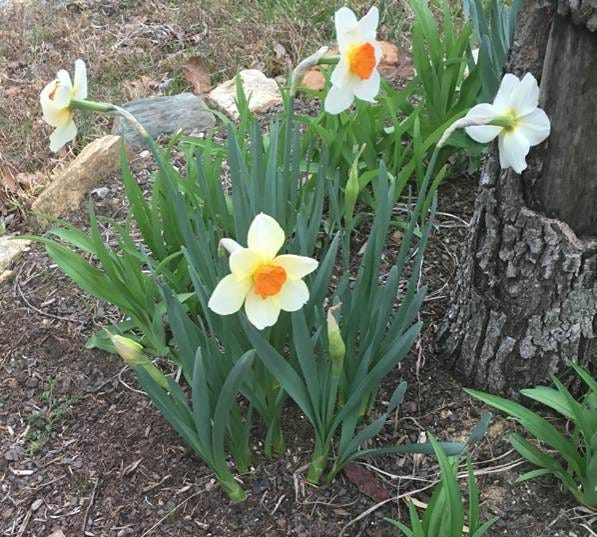
I understand that natives are more beneficial than my cultivated daffodils, tulips, and hyacinths. But these cultivated species pose no threat to my natives and actually complement them nicely, and make up less than 10% of my plant community population.
The gift they give my pollinator garden is that they bring me great pleasure, remind me that winter is drawing to a close, and for that reason, they have been allowed to remain as heralds for spring. These cultivated flowers animate my yard and offer gifts my natives simply do not provide, like blooming in the snow in February.
When you are cultivating a human community, having these resilient transplants in the mix often adds new perspectives. Those who come from outside the community have different experiences. As long as they don’t try to take over and make the community into a version of what they left behind, they can greatly complement the work of the natives. But they should never constitute the majority of your literal or metaphorical garden.
Who are the transplanted cultivated members of your community?
Do they complement what is already in place and honor the story they have entered?
How does a Non-native Become Naturalized?
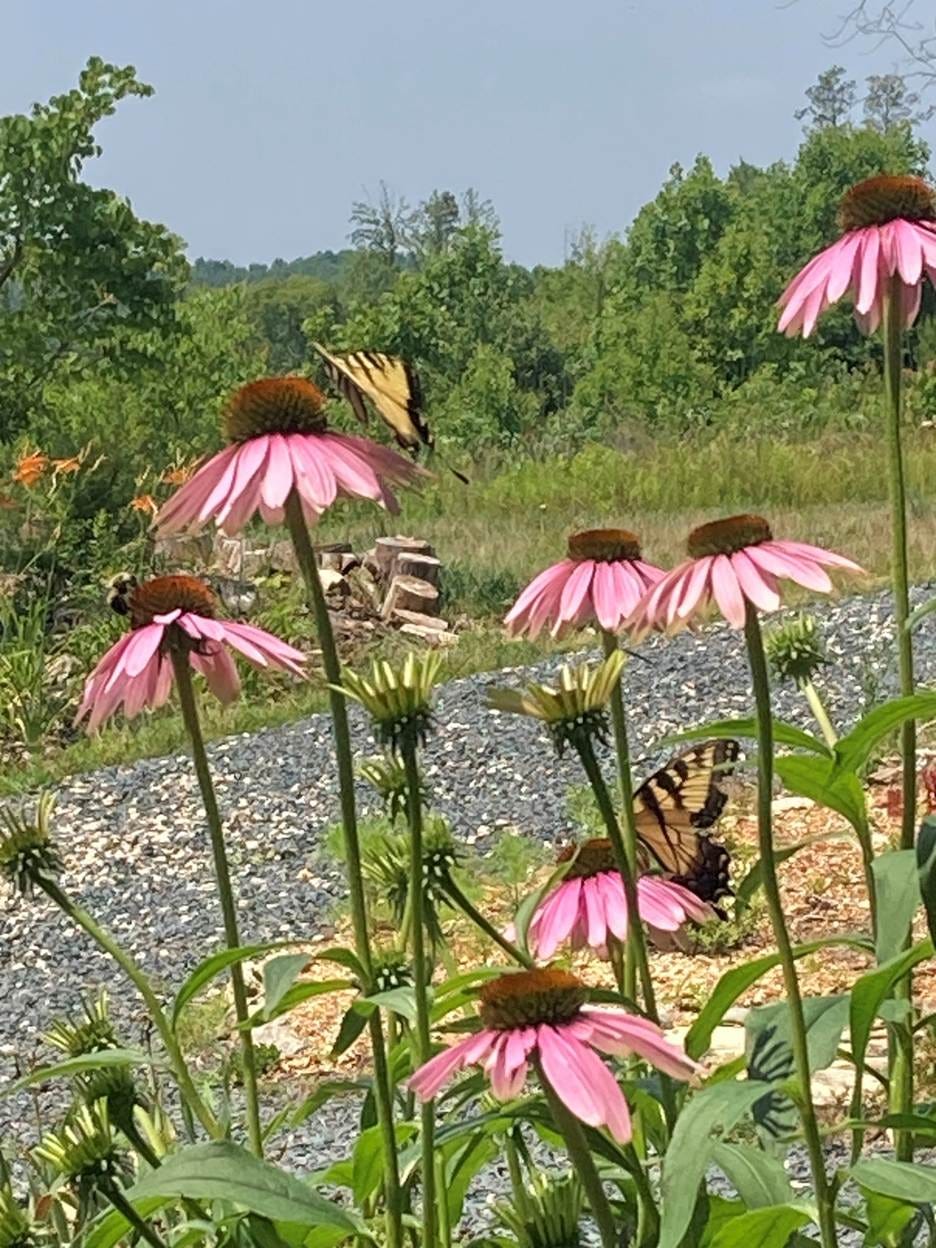
When my husband and I built our forever home here in Appomattox, Virginia, it felt a bit like coming back to our roots. We are both small-town souls who have dreamed of living on this land since we purchased it in 2005. I will never be a native Goldenrod or a Virginia Blue Bell, but I do hope one day to be accepted as a Purple Coneflower.
Purple Coneflowers are my favorite naturalized wildflower, and our native butterflies adore them. Naturalized plants are those that have been a part of the ecosystem long enough to co-evolve and begin to function much the way native species do. They are also the host plant for several varieties of native butterflies.
While co-evolving over time is one contributor to the naturalization process, another is the similarity of the naturalized species to native species. We have native coneflowers, so the Purple Coneflower is a cousin, making it more adaptive to our ecosystem.
I think the same is true for people. I was born and raised in a small southern town. No matter how hard I tried, I never felt fully at home in the suburbs of Houston or Richmond, and my time in an urban setting was even more of a stretch for me. I do not regret those experiences; they made me who I am. I have met so many amazing people along the way who taught me things I never would have learned in my hometown. But I was raised in a rural community, and there is something about your place of origin that shapes you, no matter how long you live in other cultures.
If you are a transplant to a place, do you intend for it to be your forever home?
If so, how similar is the culture to that in which you were raised?
If you have to be an invasive species, be a Ditch Lily, not a Honeysuckle vine.
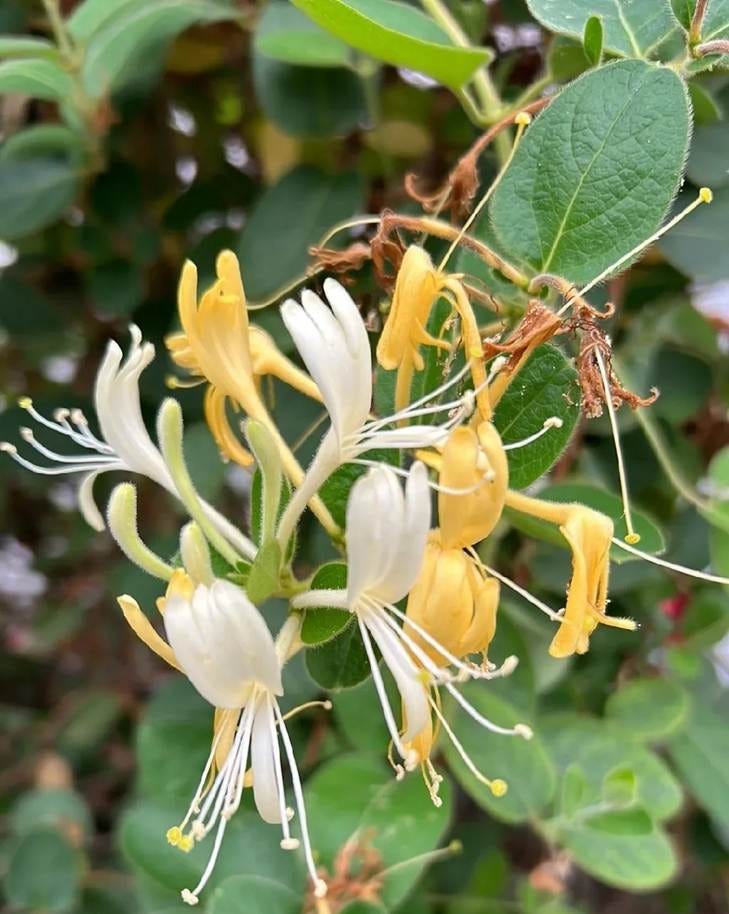
I was deeply saddened when I became a Master Naturalist and learned about these categories of species and discovered that many of the plants that I had planted in my yard were not only non-native cultivated flowers, like these daffodils, but some were actually considered invasive, including the periwinkles that I brought from our Richmond house. These got weed-wacked to death at our new home, the year I was hiking on the Blue Ridge Parkway and saw a forest overrun with them.
Periwinkle is tame in comparison to my greatest nemesis, Japanese Honeysuckle! This highly invasive vine is choking my saplings to death, covering our blackberries in densely woven blankets, and invading the forest floor. It is the bane of my existence, but it has grown so quickly that it is beyond my ability to control using non-chemical means. I just can’t bring myself to spray my forest with poison, so year after year, it gains ground.
When my plant App (I use Picture This or Seek) returns the label “invasive plant,” my heart skips a beat, and I feel panic rise as these enemies continue to find their way to my property and into my pollinator gardens and forest.
Last year, we met with an invasive species specialist from the Forestry Department, and she encouraged us not to panic but to focus on those species that are doing the greatest harm and to work in smaller sections of our land rather than getting overwhelmed by the expansiveness of the invasion. She assured us that not all invasives on the list deserved the same level of vigilance.
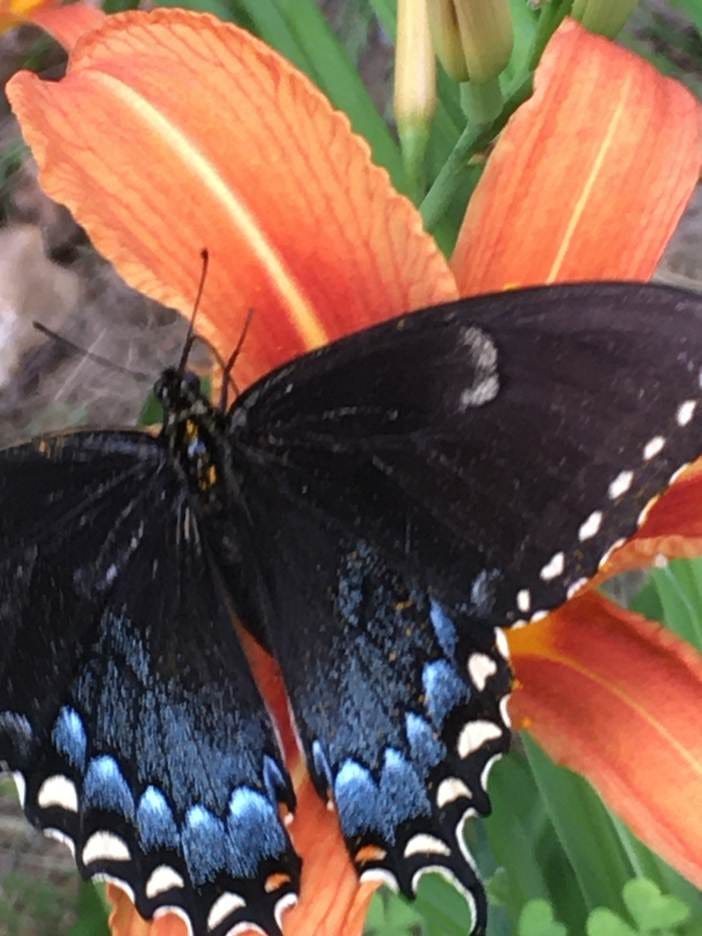
There is one invasive species that I am having a really hard time labeling as my enemy - the common orange daylilies that many call Ditch Lilies. I found them growing along our creek, assumed they were native, and planted them all over my yard. I was mortified when they came up on the “invasives” list.
My ditch lilies pleaded their case and so far, were granted a stay of execution. They are the only plants I have found that will grow in the heavy clay soil in the sections of our yard where the bulldozer removed all the topsoil, especially the sections where the trees were removed, and there is unrelenting summer sun. So, at least for now, we have a working relationship; they help rebuild the soil, reduce erosion, add a bit of color, and I let them live.
I know that many say pollinators don’t like them, but you need to tell that to our native swallowtails and hummingbirds that feed on them throughout their blooming season.
When I think about invasives in my community cultivation efforts, I think about institutionally-driven efforts that are taking over systems of care that rightfully belong to the community. In my Power Shift curriculum, I tell the story of a group of small business owners who were working together to give the commercial corridor a facelift. The effort was growing pride, helping the businesses learn to work together, and garnering tremendous support from the nearby neighbors and churches, resulting in a growing customer base.
Someone at City Hall heard about it, decided it would be a good photo op for the Mayor to hire painters to paint the buildings FOR the business owners. This decision was made without ever talking to the business owners. They did not consult us about the color scheme, something we had spent months co-creating with a local artist. They did not hire local painters, something that our team was committed to doing for those areas where volunteers were unable to do. They did not allow us to have any say in the process at all, opting instead to work with the owners of the buildings, most of whom were out of state. As a fellow business owner, it was an incredibly frustrating experience of institutional takeover that I have seen repeated many times in different forms.
Some institutions, like the story above, function like Japanese Honeysuckle. They bring in their programs and services in mass, climb all over the natives, and often choke them out by absorbing all the resources that would otherwise be available to the local community. Once these service providers are entrenched, they are nearly impossible to eradicate, and they weaken the local associational life that they replace, often creating systems of dependence.
Other institutions are like Periwinkle, less aggressive, attractive, but born out of the ideas of outsiders looking in. These are programs that secure outside funding, do something nice for a few years based on their own vision, and with their own staff from outside the community. When the funding runs out, or they encounter an obstacle, they are gone, never getting below the surface issues, eroding community trust in institutions, and having no lasting impact.
The last category of institutions is more like the Ditch Lily. They do what the natives can’t do. They till the soil, stand in the gap while natives take hold in other areas. The good ones know when they enter that their job is to work their way out of a job – slowly stepping back as the natives gain ground.
I know many of you are going to shake your head in disbelief and are yelling into your computer, “Orange Day Lilies are SUPER hard to remove!” I understand that. That is why institutional solutions should always be engaged as a last resort. They can become entrenched, forgetting that their job is to support the work of the local community.
In my personal community cultivation efforts, I have two roles. In my own backyard in the Heart of Virginia, I function as a Common Yellow Daffodil that one day hopes to be a Purple Coneflower. In my role as a coach/trainer in other communities, I am a Day Lily. Success for me is when I am no longer needed. My only role is to support those who call the place home as best I can. If it becomes about one of my partnering institutional organizations or me, we run the risk of doing great harm.
If you work for an institution and are working to strengthen communities you do not live in, be a Ditch Lily, not Japanese Honeysuckle.
If you are cultivating community as an outside institutional representative, do you recognize the danger of becoming an invasive species?
What decisions can you make in your institution that will support the natives and not take over their functions?
Are you prepared to step back by helping local community members step forward?
Your Feedback is Greatly Appreciated
As I shared, I have been publishing on Substack for six weeks. During this time, I have published highly personal posts, I have published posts that are deeply spiritual, one that was somewhat political, some that are more intellectual, some that blend personal and professional, stories from my community cultivator experiences, and those that are more educational, like this one.
It would mean a lot to me if you would share what type of content you find most helpful. Most of my posts have gotten roughly the same level of clicks, but not much feedback.
As I shared in my first post, I began writing because stories build connections, and I believe connections can change the world. That is my hope for this publication, but without feedback, it is hard to know if I am achieving this goal. Knowing what kinds of stories resonate will help me deepen connection through my writing. So help me out, share your thoughts with me.
Additional Resources
For those interested in cultivating human communities: If you are seeking to strengthen your community, I encourage you to check out our free resources over at the ABCD Community Cultivator Network. It is a free network for those seeking to strengthen communities from the Inside Out using an Asset-Based Community-Driven Development approach. If you are a community cultivator interested in learning more about training and coaching opportunities, you can send me a private message, and I will be happy to book a time to meet with you.
For those interested in cultivating plant communities: I encourage you to check out the free resources over at the Permaculture Crossing. I also follow Starhawk.
For those interested in the intersection of human and more-than-human communities: I recommend checking out Leah Rampy and her publication REWEAVING EARTH & SOUL. I also love her book Earth and Soul.
If you want to connect with other nature lovers in your area, I highly recommend you check out your local Master Naturalist program or get involved through a nearby State Park, most of which offer interpretive programming, hikes, and volunteer opportunities.
If you found this post helpful, I hope you will consider subscribing, sharing your thoughts in the comment section, and sharing this post with others. All materials on my site are free, and 100% of any paid subscriptions are donated directly to Embrace Communities, a public charity.
I both love and appreciate this article Wendy, the categories and definitions are so useful. Like you I have been uprooted and replanted many times. In some situations I strive to be a naturalized plant and in some I try to put a sign out that says "I am cultivated plant, here for you however it is helpful to use me. (PS help me to remember my status , sometimes I inadvertently escape and start being invasive. Feel free to prune and rip when that happens)"
You know I loved this post! Now you have me thinking about your analogy in terms of violets, dandelions, and white clover.