

“I want to be President.”
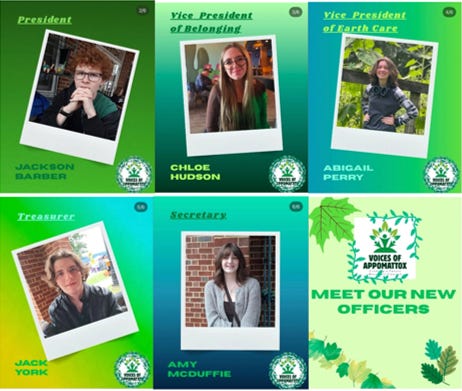
This was fifteen-year-old Jackson’s response when we were preparing our slate of officers for the newly formed Voices of Appomattox group.
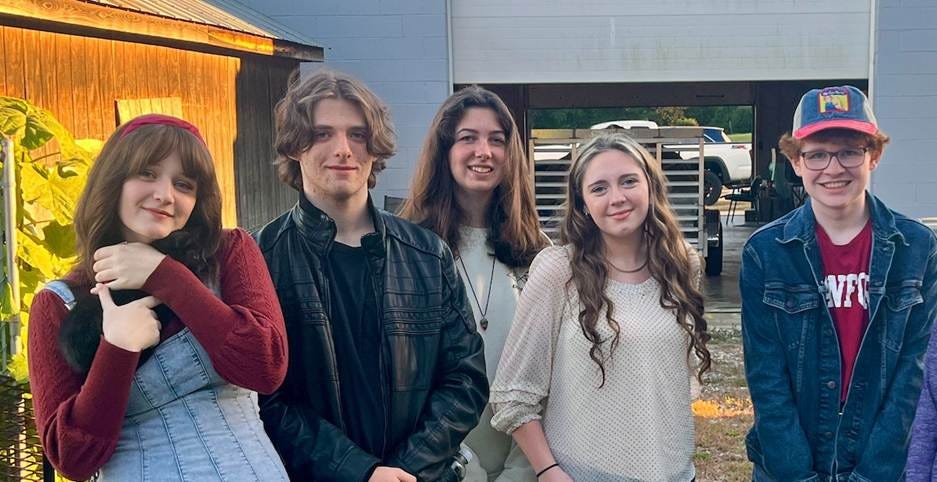
One by one, the students stepped forward to take on leadership roles. Chloe took the role of Vice President of Belonging. Abi is our newly elected VP of Earth Care. Amy will serve as Secretary, and Jack is our Treasurer.
These high school sophomores and juniors have earned these roles, and I have watched as each has found their own voice while journeying together these past six months.
What began as a community listening project has begun to bear fruit in the form a youth-led effort to cultivate a community where everyone belongs and where we learn to care for the more-than-human world around us.
Discovering the Dreams and Gifts
In six months, these students and their peers from the Appomattox High School Drama team completed a community listening project. They discovered the gifts, hopes, and dreams of over 100 of their community members.
Three themes emerged. People of all ages longed for belonging, adults wanted more opportunities for young people to grow and contribute, and young people wanted to work together to care for the earth.
When community members were asked what they would enjoy doing with others, we learned our community enjoys outdoor activities, stories, music, and other forms of creative expression.
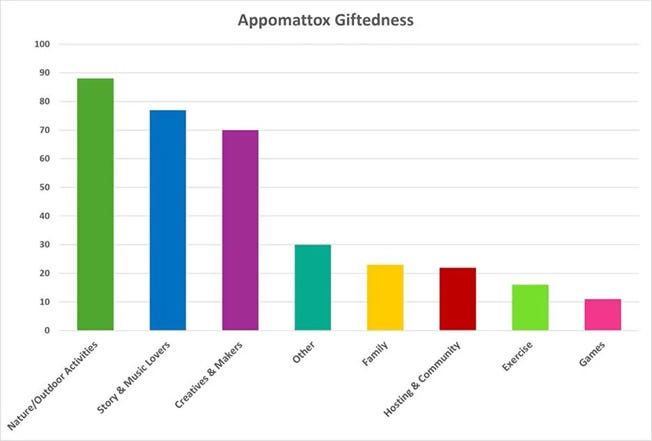
These answers helped us see not only what our community cared about, but also the gifts that were already present among us.
Putting the Pieces Together
This fall, five students and five adults formed a steering team to turn what we learned through community listening into a vision, mission, and core values for Voices of Appomattox.
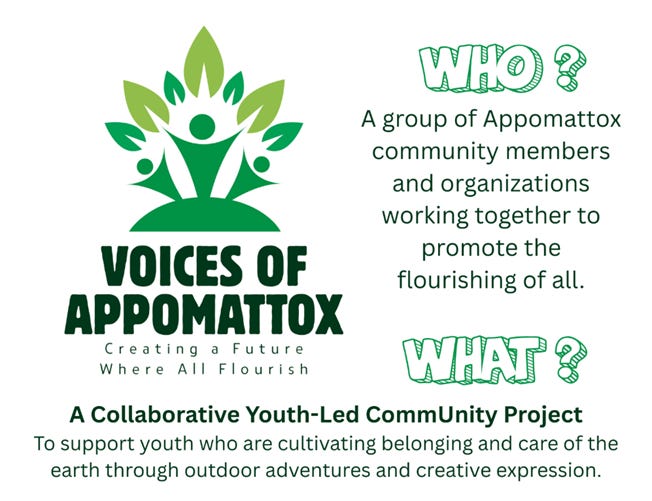
Their work resulted in three simple statements that will serve as a compass for everything that follows:
Vision: The flourishing of all, both human and more-than-human.
Mission: To support youth who are cultivating belonging and caring for the planet.
Core Value: Belonging. We believe all should be valued, accepted, and celebrated for who they are. This includes all our human neighbors, as well as the plants, animals, and all other living beings who call Appomattox, Virginia home.
In early October, they formed a governing body for this association of community members that we are calling their Mission Circle, consisting entirely of youth.
Alongside these amazing youth is our Advisory Circle consisting of five adults who have watched them grow, blossom, and bear fruit.
I have worked with teams of adults, backed by large grants, huge institutions, and countless paid staff who never reach this level of community ownership.
Yet here we are, with five teenagers taking the lead in shaping the future of their community.
So, what allowed these five teenagers to move so quickly from listening to ownership?
1. Move Quickly from Vision to Action
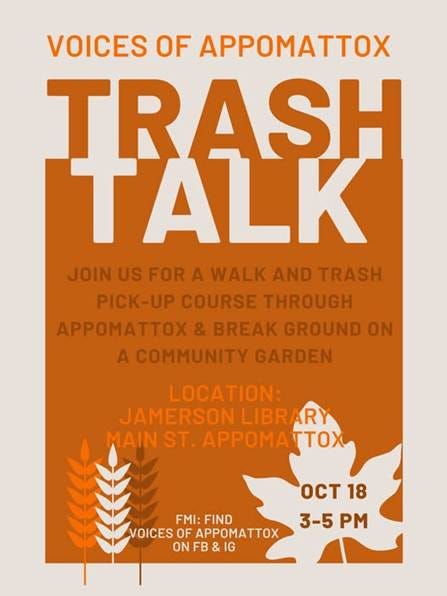
“What if we did a trash pick-up and educated people about the amount of waste going into our landfills,” Amy asked during our first planning meeting.
“It might be fun to do it as a competition; whichever team gets the most trash wins,” another member of the team added.
Jackson and Jack immediately began building a list of teammates in their heads, and the excitement about their first event, Trash Talk, grew.
Chloe, whose passion for pollinators rivals my own, agreed to lead a team focused on building a greenhouse at our host site for the event, the local library, in preparation for the launch of a new community garden next spring.
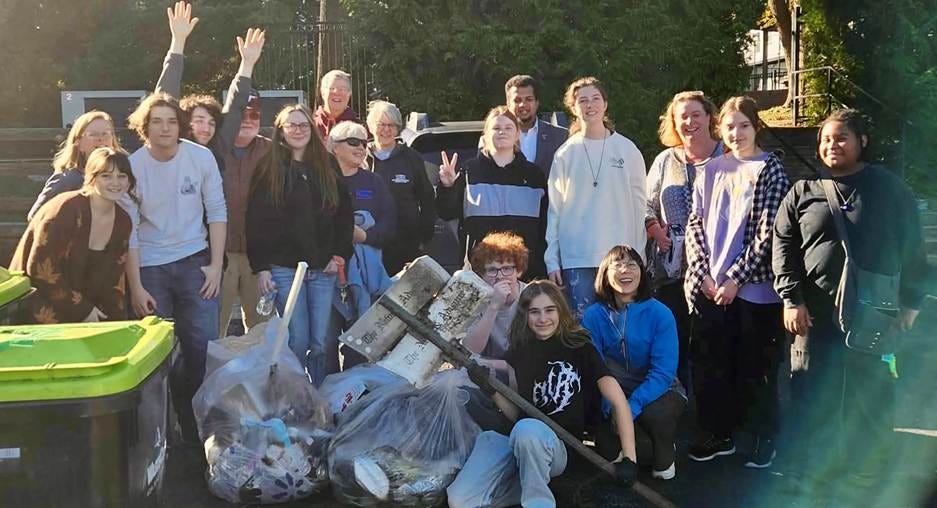
While men from different groups worked together to assemble the greenhouse, two teams of youth and adult community members picked up trash across town.
Jackson and Abi’s team, the Trash Terminators, won first prize; a bag of products from the Lynchburg-based low-waste store, but in the end, we all won.
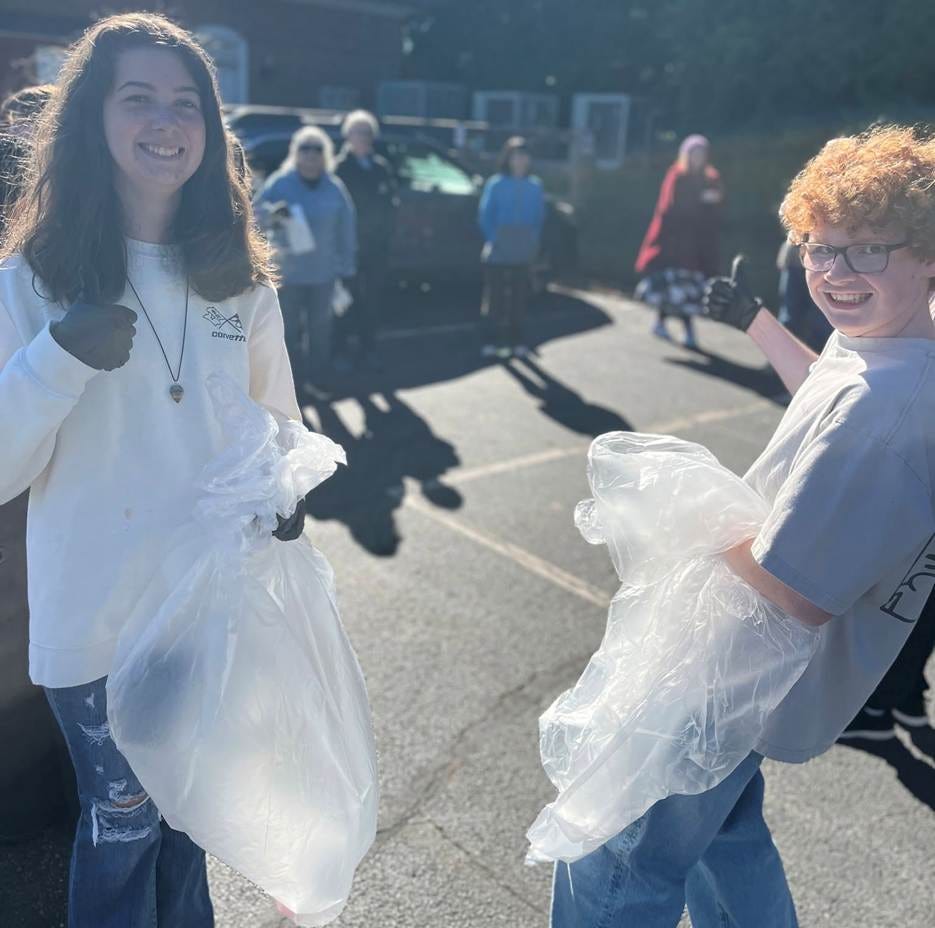
We all saw Amy’s passion as she explained the harm we are causing the planet through our excessive consumption, especially of single-use plastics.

We all laughed out loud when Jackson’s team returned carrying a large mailbox, retrieved from an abandoned lot.
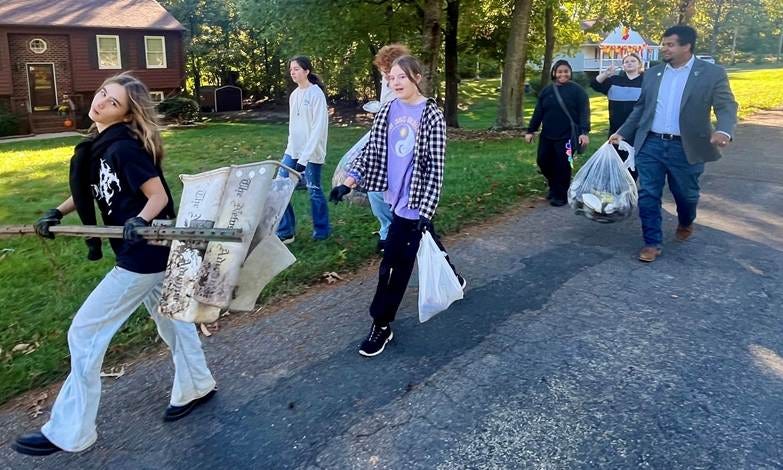
We all smiled when Tommy, a local farmer, saw value in the metal stake attached to the mailbox and how it could be useful on the farm – an instant upcycling story.
Even the introverts like my husband, who worked on the greenhouse project, returned home thankful they had participated.
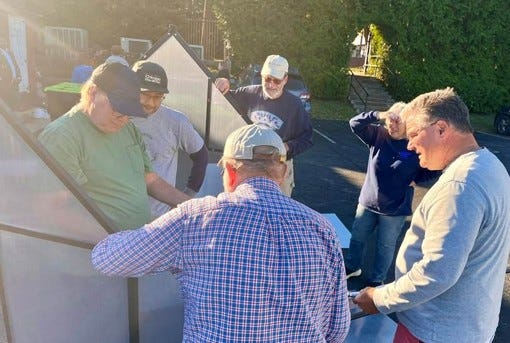
Roughly 30 community members of all ages showed up to serve together and left better informed about how to care for our big beautiful planet all because a group of young people cared enough to make it happen.
2. Built on the Bedrock of Relationships
The second reason this group was able to move from listening to community ownership so quickly is that it grew out of existing relationships. The high school drama team—with its culture of acceptance and belonging—was the fertile soil in which these student leaders grew. The adults on the steering team were already connected to local churches, associations, and organizations.
We didn’t start by trying to create something from nothing. We started with relationships and existing assets.
3. The Seed Gifts

They began with a focus on the gifts of their community, and as they learned to see and name the gifts of others, they began to see and name the gifts each of them had to offer in service to the CommUnity Dream.
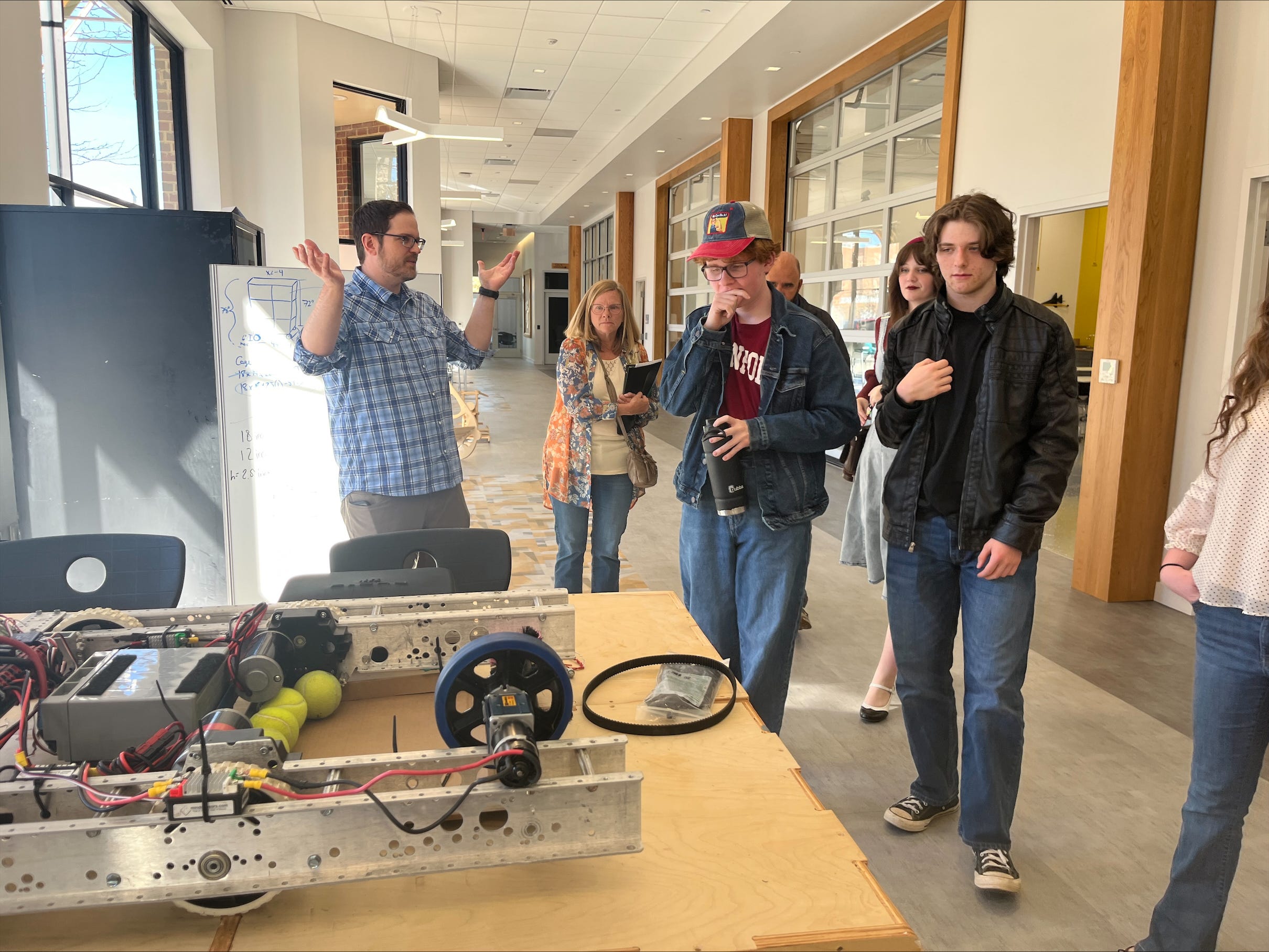
Jackson is a strong believer in the democratic principles of our nation. He is a gifted storyteller and a digital media producer. He produced our first promotional video and has committed to bringing the group’s story alive through this gift and the Voices of Appomattox YouTube and Instagram Pages.
Chloe is the heart of our little team. She cares deeply for her peers, especially those who are bullied and feel they do not belong in our small rural Virginia community. She is also passionate about the planet, especially native plants that support pollinators and other wildlife.
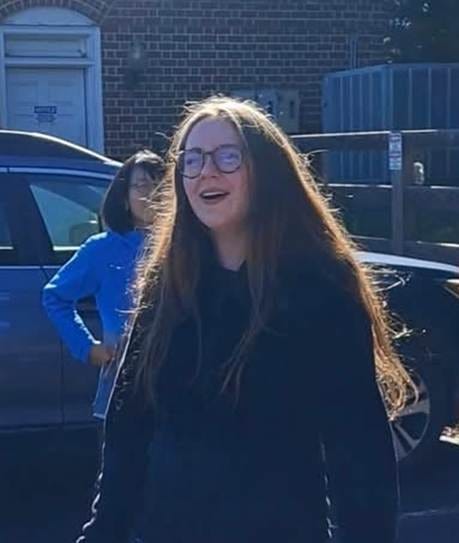
Abi is our most thoughtful member. She is quiet and contemplative. Abi’s dream is to cultivate curiosity and awareness about the natural world through service-learning events that bring the community together across all age groups.
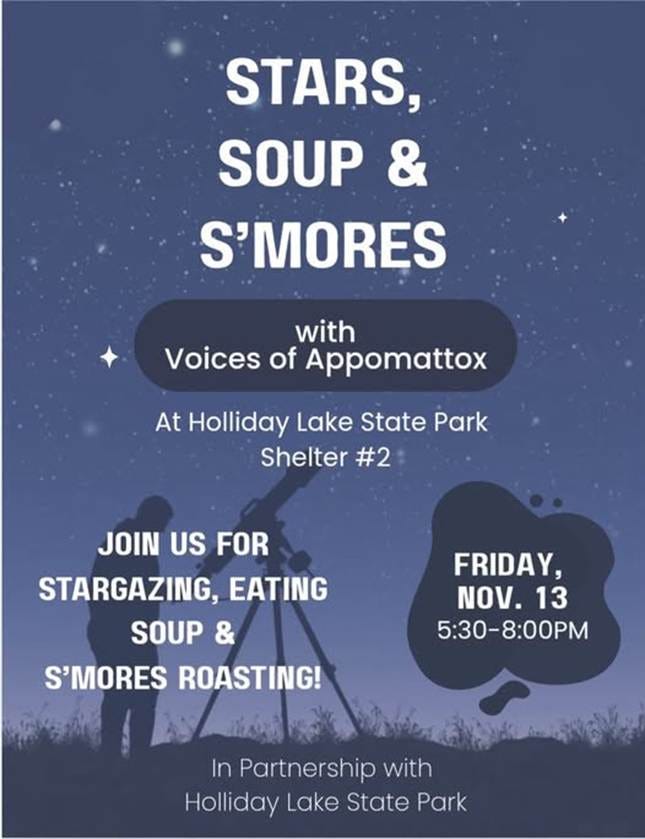
That is her hope for the upcoming Stars, Soup and S’mores event – that those who participate will experience a sense of awe and wonder as we are reminded of just how big and beautiful the universe is.
Amy is one of our youngest members. At the ripe old age of 15, she wrote her first article, which was published in our library newsletter.
Amy is the spark of energy that has moved our little group from ideas into action. Her passion for the planet and reducing consumption and waste is what prompted the group’s first public event.
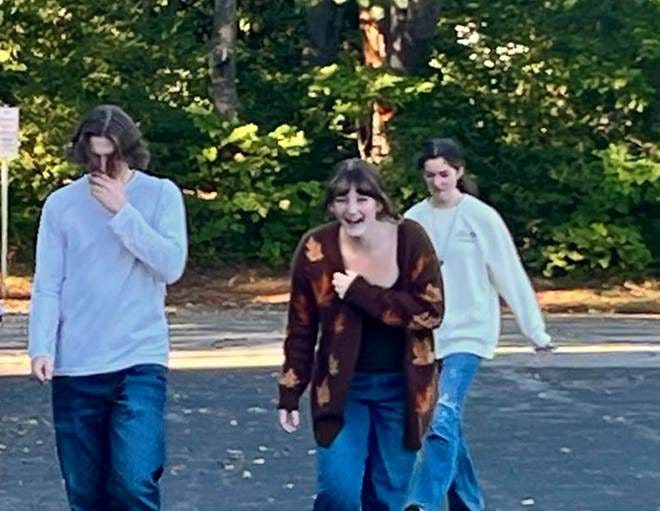
Jack is the most recent addition to our steering team. Jack is interested in economics and how the group’s community-driven mission might help students advance their long-term vocational interests.
Jack is our budding entrepreneur!
A few enterprise ideas the students are exploring are an after-school tutoring and mentoring program in partnership with the local library, a “rent a young gardener” program to support local organic farmers and promote wildlife habitat restoration, and a pop-up market to promote earth-friendly products.
Each of these young people brings something different to the table.
There is no prescribed leadership personality, no particular set of skills they all need to possess. They are discovering that their individual gifts, when woven together, can accomplish something none of them could accomplish alone.
This is what a gift economy makes possible. We stop asking people what they lack and start asking what they have to offer.
4. Weaving a Tapestry of Support

In addition to these five student leaders, we have an advisory circle of adults, each with their own gifts that they have committed to contributing to help the students bring the CommUnity Dream to life.
Ruth brings pastoral care, drama, and media experience. Evelyn brings decades of community relationships and connections. Pam brings her passion for engaging across generations in the outdoors. Kay brings his commitment to service learning and a broader coalition of faith communities. And I bring my 30+ years as a community cultivator, my passion for a good story, and my commitment to caring for our planet.
Additionally, each of our five students has identified an adult community member who is serving as a personal mentor.
There is an important distinction between these two circles of support. While our advisory circle is focusing on our shared vision, mission, and values, the mentoring team is focused on the young leaders themselves, helping them shape their projects in ways that help them grow as civic leaders and advance toward their personal vocational goals.
As the students are planning and executing their projects aimed at cultivating a spirit of belonging through projects that nurture care of the planet, the adult advisory team is working on establishing a Hometown Interns Program that will provide scholarships to those students who complete their civic engagement projects.
5. Value the Small
During the summer, over twenty youth engaged more than a hundred community members during the listening phase of the project. It was important to go wide to discern where the energy was in the broader community.
However, it is very difficult to move decisively from the listening phase to the action phase if you are trying to engage 100 people in a thoughtful discernment process.
Discerning the themes, lessons, and potential leadership capacities in order to move from listening into action requires time, tremendous intentionality, and a deep trust in the process.
The five students and five adults who served on the steering team emerged from the listening phase. They were among the most committed and passionate about the project.
Because they witnessed the project from its inception, they are better able to remain centered in what they collectively experienced.
They all become co-creators and have tremendous respect for the process it took to get here. They are less likely to abandon the vision, mission, and values that they helped craft from the insights shared during the listening phase.
When trying to make the shift from listening to action, it is more effective to allow a smaller circle of committed people to take responsibility for discerning the path forward.
The steering team has completed their work. Over the next few months, we are moving from the initial listening phase into the team-building phase, which will shift us from one steering team to multiple action teams.
Follow VoA on Facebook and/or Instagram to learn how you can get connected to Voices of Appomattox or to follow the progress of this effort.
6. Letting the Vision Lead
Many development efforts never get to the point of community ownership because those who catalyze the effort fail to take the time to gain clarity about the vision and then step back and allow the vision, mission, and values to become the driving force.
In my experience, the earlier you can do this, the better, but it is also risky. For as many success stories as I have helped co-author, I have as many that failed because I did not equip emerging leaders well enough, because I transferred ownership to one person instead of a team, because motives or personal agendas did not align with the community vision, or because the dream was too vague to catalyze action.
Getting groups of individuals to collaborate for the greater good, without the carrot of a paycheck or some kind of punishment avoidance motivation, is incredibly difficult.
However, it is this kind of quest for the common good that built our nation and is what holds a democracy together.
Democracy is more than a system of government. It is a way of living together, of learning to listen, share responsibility, and work toward a common good that is bigger than any one of us.
Sadly, all too often, it turns into a popularity contest or a marketing campaign.
If we want the next generation to sustain the true essence of democracy, we have to give them opportunities to practice it now.
7. Trusting the Process
The first round of community listening has ended, and we are entering the team-building phase.
It is now time for our teens to practice what they have experienced as team leaders.
They will practice cultivating belonging, listening for the gifts of others, inviting people to use those gifts, partnering with adults, asking for help, and letting the vision lead them into action.
There may be times when they question if community-driven efforts such as this can really work. They may be tempted to abandon the process, to give up mobilizing the gifts of their community.
But I trust each of them is deeply committed to the vision and that they have faith in the democratic heartbeat of our nation and this form of community building.
I have no idea what the future of Voices of Appomattox will be.
This is the point in the development effort where I have to remind myself to trust the process.
To step back and trust them to step forward with the vision, mission, and values as their guide and the safety net of adult guides to catch them if they fall.
It has only been a few weeks since the Voices of Appomattox leadership team was formed, and I am witnessing incredible levels of commitment.
It is not the students that most concern me. I think they are fully ready and motivated to lead.
It is the adults—mainly me—who may be the greatest threat to the fruit of our summer labor.
A Fruitful Harvest
We have spent six months cultivating the soil, planting seeds, and nurturing the conditions for something to grow.
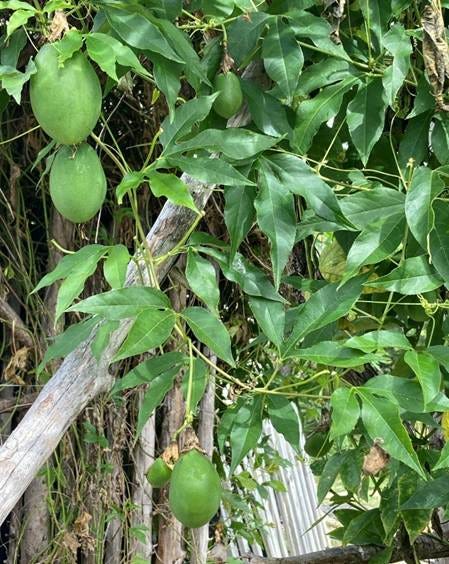
As I shared in my prior post, I pray they are like the passionflower that has spread across my yard, bloomed prolifically, and is now bearing excessive fruit.
As the fruit falls from my passion vine, I have to trust that some of them have fallen in good soil and will take root.
And perhaps that is the greatest lesson these five teenagers have for all of us: the work of a community cultivator is not to control what grows, but to create the conditions for life to flourish.
To plant, to nurture, to make room, and eventually, to step aside.
Deeper Dive into Youth-Led Community Cultivation
If you would like to learn more about these student-defined projects, please send me a private message, and I will send you more details about our Hometown Interns Program.
If you are interested in past youth-led projects, you can learn more here.
Field Notes from Appomattox Series
If you are interested in how this development effort began and all the tiny steps we took along the way, here are the prior stories in our Field Notes from Appomattox Series.
The Place Our Nation Reunites? Field Notes from Appomattox, Virginia #1
Drama in Appomattox: Summer Youth-Led Listening Project - Field Notes from Appomattox #2
The Surprising Future Our Teens Dream of - Field Notes from Appomattox #3